Creatine timing is one of the most common questions in sports nutrition. Does it matter whether you take it before or after training? And what else do you need to know to get the most from it? Here's the full picture.
What is creatine?
Creatine is an amino acid derivative, made from amino acids, but not used to build protein. It's 100% natural and found in foods like beef, pork and fish, with herring being particularly high in creatine. Your body also produces it naturally.
You could in theory increase your muscle creatine by eating more meat, but the quantities involved make a creatine supplement a far more practical option. You would need to eat around 1.3kg of beef to get the same amount of creatine as a single scoop of creatine monohydrate powder.1,2 Supplements are not only more convenient, they're considerably cheaper too.
By taking creatine daily, you can increase the creatine content of your muscles by 20-40%.3,4

What does creatine do?
The benefits of creatine in the gym start to happen when your muscles are saturated with creatine, meaning they've absorbed as much as they can and can't increase their creatine content any further.
Creatine works by helping your muscles regenerate ATP during exercise.5 ATP is what your muscles use for energy, and having more creatine available means you can regenerate ATP faster. The faster you regenerate ATP, the harder you can train.
Benefits of creatine
Based on the evidence, creatine supplementation can support:6,7
- Sprint performance
- The ability to lift more weight or complete more volume in the gym
- Glycogen synthesis in muscles, giving you a ready source of energy for continued exercise
- Anaerobic threshold, your ability to sustain quick, high-intensity or explosive efforts
- Aerobic capacity
All of those improvements can contribute to building greater strength and muscle over time.
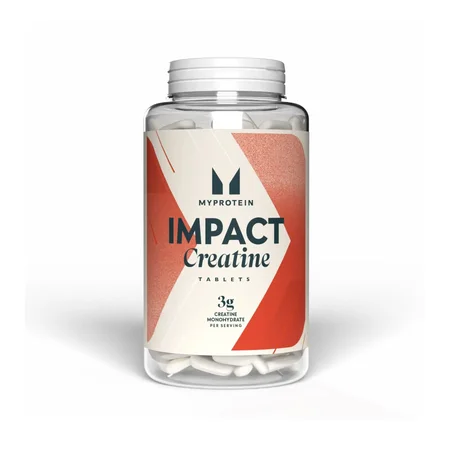
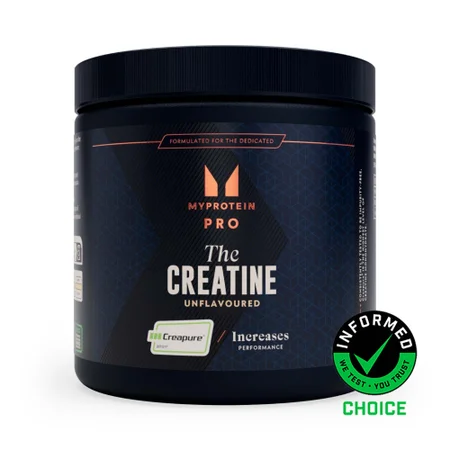

How much creatine should you take?
The dosage is straightforward: 3-5g per day, every day. Larger, more muscular individuals who are very active may benefit from a higher dose, up to around 10g per day.
It's recommended to take creatine with food, or mixed into juice, water or a protein shake.
Should you load creatine?
Loading means taking a higher dose, typically 20g per day for one week, to saturate your muscles with creatine quickly, before dropping to a 3-5g maintenance dose. You don't need to load, but it may help you get to full saturation and start seeing performance benefits sooner.
When should you take creatine?
The honest answer is that it doesn't really matter. The benefits of creatine come from having fully saturated muscles, and that requires consistent daily intake, not precise timing around workouts.
Once your muscles are fully saturated, it can take four to six weeks for creatine levels to return to baseline. That means that if you miss a day, or even a week here or there, it's unlikely to have a meaningful impact on your performance. Just take it every day, and don't worry about when.
What about the research on before vs after training?
A meta-analysis published a few years ago did find that taking creatine immediately after resistance exercise was slightly better for increasing muscle mass than taking it immediately before training, with no difference in strength outcomes.8
However, the meta-analysis drew data from only three studies, which is a small base of evidence. Creatine timing is simply not a well-researched area, and it's easy to get too caught up in fine details when the bigger picture — taking it consistently every day — is what actually drives results.

How Creatine Is Made: From The Lab To Your Shaker
The process behind this popular supplement....
Frequently asked questions
Do I need to take creatine at a specific time of day?
No. Consistent daily intake matters far more than timing. As long as you're taking creatine every day, when you take it is not something worth worrying about.
Should I take creatine before or after training?
Either is fine. One meta-analysis suggested a small advantage to taking it immediately post-workout for muscle mass, but the evidence base is limited. The practical advice is simply to take it whenever it fits your routine.
Does it matter what I mix creatine with?
No. Juice, water or a protein shake all work equally well. Take it with food if possible.
Do I need to load creatine?
No. Loading is optional and simply speeds up the process of saturating your muscles. Without loading, taking 3–5g daily will achieve the same result, it just takes longer, typically three to four weeks.
What happens if I miss a day?
Very little. Once your muscles are fully saturated, creatine levels take four to six weeks to return to normal. Missing a day or even a week is unlikely to affect your performance.
How much creatine is in food?
Foods like beef, pork and fish contain creatine, but the amounts are relatively modest. You would need around 1.3kg of beef to match the creatine in a single scoop of creatine monohydrate powder, which is why supplementation is a much more practical approach.
Take home message
Creatine is one of the most well-evidenced supplements available, and using it effectively is straightforward. Take 3–5g every day, with food and mixed into whatever drink works for you. Don't stress about timing. If you want to reach full saturation faster, a loading phase can help, but it isn't necessary. Consistency is the only thing that matters.




- Purchas, R. W., Rutherfurd, S. M., Pearce, P. D., Vather, R., & Wilkinson, B. H. (2004). Concentrations in beef and lamb of taurine, carnosine, coenzyme Q(10), and creatine. Meat Science, 66(3), 629-637.
- del Campo, G., Gallego, B., Berregi, I., & Casado, J. A. (1998). Creatinine, creatine and protein in cooked meat products. Food Chemistry, 63(2), 187-190.
- Hultman, E., Söderlund, K., Timmons, J. A., Cederblad, G., & Greenhaff, P. L. (1996). Muscle creatine loading in men. Journal of Applied Physiology, 81(1), 232-237.
- Harris, R. C., Söderlund, K., & Hultman, E. (1992). Elevation of creatine in resting and exercised muscle of normal subjects by creatine supplementation. Clinical Science, 83(3), 367-374.
- Ydfors, M., Hughes, M. C., Laham, R., Schlattner, U., Norrbom, J., & Perry, C. G. (2016). Modelling in vivo creatine/phosphocreatine in vitro reveals divergent adaptations in human muscle mitochondrial respiratory control by ADP after acute and chronic exercise. The Journal of Physiology, 594(11), 3127-3140.
- Vandenberghe, K., Goris, M., Van Hecke, P., Van Leemputte, M., Vangerven, L., & Hespel, P. (1997). Long-term creatine intake is beneficial to muscle performance during resistance training. Journal of Applied Physiology, 83(6), 2055-2063.
- Kreider, R. B., Kalman, D. S., Antonio, J., Ziegenfuss, T. N., Wildman, R., Collins, R., et al. (2017). International Society of Sports Nutrition position stand: Safety and efficacy of creatine supplementation in exercise, sport, and medicine. Journal of the International Society of Sports Nutrition, 14, 18.
- Forbes, S. C., & Candow, D. G. (2018). Timing of creatine supplementation and resistance training: A brief review. Journal of Exercise and Nutrition, 1(5).