Instant overview
- Creatine is one of the most researched supplements available, supporting energy production during high-intensity exercise and helping to increase muscle mass and strength.
- You can start with a loading phase (20g daily for 5-7 days) to saturate muscle stores quickly, or take a maintenance dose (3-5g daily) for a gradual approach over 28 days.
Creatine monohydrate is the most extensively studied form, with Creapure® offering the highest purity (99.99%), while creatine HCL is designed for easier absorption and digestive comfort. - Consistency matters more than timing, though taking creatine alongside carbohydrates and protein — such as in a post-workout shake — may enhance muscle uptake.
Creatine is a naturally occurring molecule that supports energy production during short bursts of high-intensity exercise, such as sprinting or heavy lifting. Supplementing with creatine can increase your internal muscle stores, potentially allowing you to train harder for longer and build more muscle mass over time.
How to take creatine: at a glance
| Feature | Specification | Why it matters |
|---|---|---|
| Loading phase | 20g daily (split into 4 × 5g doses) for 5–7 days | Saturates muscle stores quickly so you experience performance benefits sooner |
| Maintenance dose | 3–5g daily | Maintains elevated creatine stores; takes ~28 days to reach saturation without loading |
| Most studied form | Creatine monohydrate | Backed by the majority of clinical trials; proven effective for strength and power |
| Highest purity | Creapure® (99.99% pure) | Rigorously tested and free from impurities; ideal for quality-conscious athletes |
| Best timing | Post-workout with carbs and protein | May enhance muscle uptake; consistency is more important than perfect timing |
| Rest days | Continue daily dosing | Maintains muscle saturation and supports long-term performance gains |
Jump to:
- What is creatine?
- Key benefits of creatine
- How to take creatine: loading vs maintenance
- Which creatine should I take?
- What is the best way to take creatine?
- Creatine intake comparison table
- Frequently asked questions
What is creatine?
Creatine is a naturally occurring molecule found in foods like beef, pork, and fish. The body also produces it naturally from the amino acids arginine, glycine, and methionine. Approximately 95% of the body's creatine is stored in skeletal muscle, two thirds of it as phosphocreatine.1,2
Phosphocreatine is essential for energy production during short bursts of high-intensity exercise, such as sprinting or heavy lifting. By taking a creatine supplement, you can increase these internal stores, potentially allowing you to train harder for longer.1
Key benefits of creatine
The primary benefit of creatine is its ability to support energy production during intense activity. Studies suggest that consistent supplementation can lead to significant improvements in strength, power, and lean muscle mass.2
Beyond performance, research indicates that creatine may also support recovery. It has been suggested to reduce muscle damage and help replenish glycogen stores after a workout.3,4 Key benefits include:
Increased high-intensity performance: Helps you manage more reps and sets.1 Enhanced recovery: May reduce muscle soreness after eccentric exercise.4 Muscle growth: Supports long-term adaptations to resistance training.2 Injury prevention: Evidence suggests it may help reduce the risk of strains and other injuries.2
How to take creatine: loading vs maintenance
When starting your journey, you generally have two choices: a loading phase or a maintenance phase. Both methods eventually lead to the same result, but the speed at which you see benefits differs.
The loading phase
A loading phase involves taking a higher dose for a short period to saturate your muscle stores as quickly as possible. This typically involves taking 20g of creatine per day, split into four 5g doses, for 5–7 days.1 This strategy allows you to experience the performance benefits much sooner.
The maintenance phase
If you prefer a simpler routine, a maintenance phase involves taking a smaller dose of 3–5g daily. This method will still maximise your muscle stores, but it typically takes around 28 days to reach the same level as a loading phase.1 It is often preferred by those who find higher doses cause mild digestive discomfort.5
Which creatine should I take?
Creatine comes in various formats to suit different lifestyles. While the core benefit remains the same, the "best" one often depends on your preference for convenience or purity.
What is creatine monohydrate?
Creatine monohydrate is the original and most extensively studied form of creatine. It consists of a creatine molecule with one water molecule attached. Because it has been used in the vast majority of clinical trials, it is the form that studies suggest is the most effective for increasing physical performance and supporting high-intensity exercise.1 It is highly bioavailable, cost-effective, and available in multiple formats.
What is Creapure®?
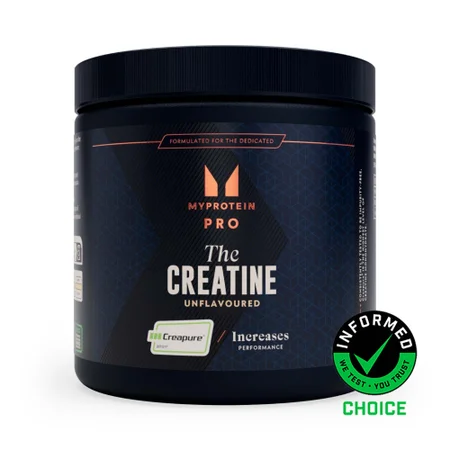
While standard monohydrate is highly effective, Creapure® is often considered the gold standard. It is a premium, micronised form of creatine monohydrate produced in Germany. It is rigorously tested to be guaranteed 99.99% pure and free from impurities like creatinine or dicyandiamide, making it the choice for those who want the highest quality supplement possible.
What is creatine HCL?
Creatine HCL (hydrochloride) is creatine bonded with a hydrochloride salt. This bond is designed to increase the solubility and absorption of the molecule.
Because it dissolves more easily than monohydrate, some users find it gentler on the stomach while still providing the performance-boosting benefits you expect.1
It is an excellent alternative for those who experience mild bloating from traditional powders.
Powders, tablets and gummies
Powders: Generally the most cost-effective and versatile. Ideal for mixing into post-workout shakes or juice. Tablets and capsules: Perfect for those on the go or who find the texture of powder unappealing. No mixing is required, and they are easy to track. Gummies: A convenient, great-tasting alternative. They are easy to chew and don't require any water, making them ideal for busy schedules or travel.
What is the best way to take creatine?
Consistency is more important than perfect timing. However, research suggests that taking creatine alongside carbohydrates and protein may increase its uptake by the muscles.6 Adding your dose to a post-workout protein shake is an effective way to tick this box.
Taking creatine close to your workout might be slightly more beneficial than taking it before. But if you are in a loading phase, ensure you spread your doses throughout the day to minimise the risk of stomach cramps.
Myprotein creatine comparison table
This table outlines the maintenance dose for our key products and their specific benefits.
| Product | Maintenance (3-6g/day) | Key Benefit | Informed Choice? |
|---|---|---|---|
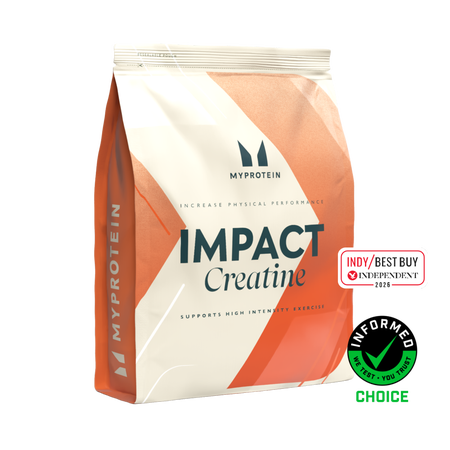
| Impact Creatine Powder | 1-2 scoops daily | Tried & trusted for performance | Yes |
| THE Creatine (Creapure®) | 1 scoop daily | 99.99% pure; easy mixing | Yes |
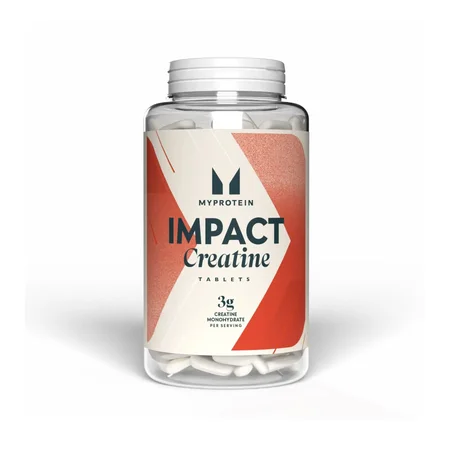
| Creatine Monohydrate Tablets | 3 tablets daily | Convenient "on-the-go" format | No |
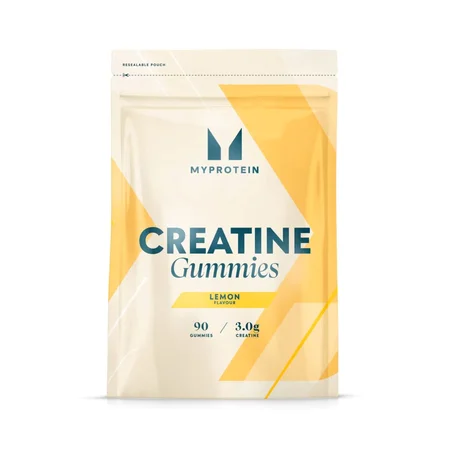
| Creatine Gummies | 3 gummies daily | Tasty; no shaker required | Tested by Eurofins |
| Creapure® Capsules | 4 capsules daily | Purest form in capsule form | No |
| Creatine HCL | 1 scoop daily | Highly soluble; easy on stomach | No |
Frequently asked questions
Do I need to take creatine on rest days?
Yes, it is important to take creatine on rest days to maintain the saturation levels in your muscles. Consistency is the most vital factor for seeing long-term results.
What is the best time to take creatine?
While it is consistency that matters, some studies suggest that taking creatine near the time of exercising may offer a slight advantage for muscle gain.2 Mixing it with a carbohydrate-rich drink or meal can also help with absorption.6
Does creatine cause hair loss?
No, there is currently no robust scientific evidence to suggest that creatine supplementation causes hair loss. This is a common myth that has not been supported by clinical studies in humans.
Can I mix creatine with my pre-workout?
Yes, many people mix creatine powder with their pre-workout. Just ensure you are still hitting your daily 3-5g dose if your pre-workout contains a smaller amount.
Do I need to cycle creatine?
No, there is no need to "cycle" on and off creatine. It is safe for daily, long-term use.2
Does creatine cause water retention?
Yes, creatine draws water into your muscle cells, which can cause a slight increase in body weight. This is not "bloating" in the traditional sense, but rather cellular hydration that supports muscle function.5
Can I take creatine with coffee?
Yes, research into the interaction between caffeine and creatine is mixed, but most evidence suggests that moderate caffeine intake does not stop creatine from working effectively.5
What is Informed Choice?
Informed Choice is a quality assurance and testing programme for supplements. When a product carries the Informed Choice mark, it proves that the supplement has been regularly tested for prohibited substances and manufactured to the highest industry standards. This certification ensures that the ingredients and production processes meet stringent quality demands, giving you complete confidence in the purity and safety of your supplement.
Take home message
Creatine is a highly effective supplement for anyone looking to boost their strength and high-intensity performance. Whether you choose a fast loading phase or a steady maintenance routine, the key is daily consistency. From pure Creapure® powders to convenient gummies, there is a format to fit every lifestyle and training goal.

- Hultman, E., Soderlund, K., Timmons, J., Cederblad, G., & Greenhaff, P. (1996). Muscle creatine loading in men. Journal of Applied Physiology, 81(1), 232-237.
- Buford, T. W., Kreider, R. B., Stout, J. R., Greenwood, M., Campbell, B., Spano, M., … & Antonio, J. (2007). International Society of Sports Nutrition position stand: creatine supplementation and exercise. Journal of the International Society of Sports Nutrition, 4(1), 6.
- Nelson, A. G., Arnall, D. A., Kokkonen, J., Day, R., & Evans, J. (2001). Muscle glycogen supercompensation is enhanced by prior creatine supplementation. Medicine & Science in Sports & Exercise, 33(7), 1096-1100.
- Cooke, M. B., Rybalka, E., Williams, A. D., Cribb, P. J., & Hayes, A. (2009). Creatine supplementation enhances muscle force recovery after eccentrically-induced muscle damage in healthy individuals. Journal of the International Society of Sports Nutrition, 6(1), 13.
- Tarnopolsky, M. A. (2010). Caffeine and creatine use in sport. Annals of Nutrition and Metabolism, 57 Suppl 2, 1-8.
- Steenge, G. R., Simpson, E. J., & Greenhaff, P. L. (2000). Protein- and carbohydrate-induced augmentation of whole body creatine retention in humans. Journal of Applied Physiology, 89(3), 1165-1171.
- Jagim, A. R., Oliver, J. M., Sanchez, A., Galvan, E., Fluckey, J., Riechman, S., … & Kreider, R. B. (2012). A buffered form of creatine does not promote greater changes in muscle creatine content, body composition, or training adaptations than creatine monohydrate. Journal of the International Society of Sports Nutrition, 9(1), 43.
- Spillane, M., Schoch, R., Cooke, M., Harvey, T., Greenwood, M., Kreider, R., & Willoughby, D. S. (2009). The effects of creatine ethyl ester supplementation combined with heavy resistance training on body composition, muscle performance, and serum and muscle creatine levels. Journal of the International Society of Sports Nutrition, 6(1), 6.