
Vitamin D is one of the few vitamins that most people should genuinely consider supplementing with. Unlike many supplements, the case for vitamin D is backed by a simple problem: we struggle to make enough from sunlight and we get very little from food.
Jump to:
- What is vitamin D?
- How does your body make vitamin D?
- Why is vitamin D deficiency so common?
- What does vitamin D do in the body?
- How much vitamin D should you take?
- Frequently asked questions
What is vitamin D?
Vitamin D is a fat-soluble vitamin, meaning it dissolves in and can be stored in body fat. This makes it fundamentally different from water-soluble vitamins like B and C, which can't be stored in the body and any excess is simply excreted in urine.
The fact that vitamin D is fat-soluble has both an upside and a downside. The upside is that your body can store any extra vitamin D you make from sunlight or consume from food, building up a reserve. The downside is that if you consume far more than you need over a prolonged period, it can accumulate to toxic levels, a condition known as hypervitaminosis D.
The current UK recommended daily intake for vitamin D3 is 10 micrograms, which is equivalent to 400 international units (IU). International units are used because vitamin D comes in different forms, and IU standardise the effects across those forms.
How does your body make vitamin D?
Your body produces vitamin D through a chain of conversions that starts in the skin. Cholesterol is used to form a substance called 7-dehydrocholesterol, which sits just under the surface of the skin. When UVB rays from sunlight hit this compound, it converts to pre-vitamin D3, which then becomes cholecalciferol (vitamin D3).
From there, cholecalciferol travels to the liver where it's converted to calcidiol, also known as 25(OH)D3. This is the form used to measure your serum vitamin D levels in a blood test. Finally, calcidiol is converted in the kidneys to calcitriol, the biologically active form of vitamin D.
One reassuring aspect of this process is that your body has a built-in feedback system that prevents you from producing too much vitamin D from sunlight alone, so there's no risk of toxicity from sun exposure itself.
Why is vitamin D deficiency so common?
Despite being able to make vitamin D from sunlight, most people don't produce anywhere near enough. To make sufficient vitamin D from sun exposure alone, you would need around 30 minutes of sunlight on your face, arms and legs, twice a week, assuming you have very fair skin and are relatively young.
In reality, most people spend the majority of their time indoors. When they do go outside, they're usually fully clothed. Even driving doesn't help because glass filters out UVB rays. If you live far from the equator, as in Ireland or the UK, UVB rays are only strong enough to trigger vitamin D production during the summer months.
People with darker skin face an additional challenge. Higher melanin levels in the skin make it significantly harder to produce vitamin D from sunlight, particularly for those living far from the equator. Older people also produce vitamin D from sunlight less efficiently than younger people.
Can you get enough vitamin D from food?
The dietary picture is even bleaker. There are very few good food sources of vitamin D. Beef steak contains around 5 micrograms per kilogram, which means you would need to eat two kilograms of steak just to meet your daily requirement. Dairy products generally contain even less, which is why they are often fortified with vitamin D. Egg yolks are slightly better, but you would still need around 250 grams of pure egg yolk to hit your daily target.
Animal liver can be a reasonable source, as can some oily fish and fish liver, but these aren't foods most people eat regularly. For non-animal sources, the options are even more limited. Mushrooms grown under special UV lamps can contain vitamin D, but the form they produce, ergocalciferol (vitamin D2), is not converted to the active form as efficiently as vitamin D3.
The scale of the problem is significant. More than 40% of Europeans have serum vitamin D levels below 50 nanomoles per litre, the threshold for sufficiency. Around 13% fall below 30 nanomoles per litre.1 Vitamin D deficiency is considered a global health problem.2
What does vitamin D do in the body?
Vitamin D has an unusually wide reach in the body, partly because of the vitamin D receptor. This is a nuclear receptor, meaning that when vitamin D binds to it, it directly regulates the expression of specific genes. The vitamin D receptor is found in virtually every tissue in the body, which gives vitamin D a broad role in health.3
Bone health and calcium regulation
Vitamin D is essential for building and maintaining a strong skeleton through its regulation of blood calcium levels. It increases the absorption of calcium from the gut, helps the kidneys reabsorb calcium before it's excreted, and can even draw calcium from the bones when blood levels drop too low. Maintaining a specific blood calcium level is critical because calcium is essential for nerve transmission and muscle contraction.
Lower vitamin D levels are associated with lower bone mineral density and a greater risk of fractures in both younger and older people.4
Immune function
Vitamin D plays a significant role in the immune system, helping the body to fight off infection. Supplementation has been associated with lower rates of upper respiratory tract infections, although it's important to understand how nutrition science frames these findings.5
We cannot say that having sufficient vitamin D levels would prevent someone from getting an infection. What we can say is that it reduces the potential risk. This is a distinction people often get wrong with nutrition science: we're talking about probability, not guaranteed protection.
Muscle growth and physical performance
Higher levels of vitamin D are associated with higher levels of testosterone,6 greater muscle mass, strength and physical function.7 Because of these combined effects across bone health, immune function and physical performance, higher vitamin D levels are also associated with a lower risk of death as we age.8
Insulin sensitivity and body composition
Vitamin D has an important role in insulin sensitivity and how the body processes glucose, as well as the health of the body's fat stores.9
How much vitamin D should you take?
Many vitamin D supplement trials have failed to show benefits, likely because they didn't supplement at a high enough dose to meaningfully raise serum levels. The current UK recommendation of 400 IU is the dose found in most multivitamins, but it is probably not enough to increase serum vitamin D levels significantly.
For people with a confirmed deficiency, higher doses of vitamin D3 may be more effective, up to the upper recommended limit of 4,000 IU per day. If a blood test reveals that your serum vitamin D levels are very low, your doctor may prescribe an even higher dose until levels recover. Doses at this level should be discussed with a healthcare professional.
The best approach is to get your vitamin D levels tested so you know your starting point, and then retest after around a year to confirm that supplementation has worked. This is also a sensible safeguard against taking too much, which can have serious negative health effects.
In the meantime, if you suspect you may be deficient, speak to your GP or healthcare provider about testing and an appropriate dose of vitamin D3.
Frequently asked questions
What is the difference between vitamin D2 and vitamin D3?
Vitamin D2 (ergocalciferol) is the form found in UV-treated mushrooms and some supplements, while vitamin D3 (cholecalciferol) is the form produced in human skin and found in animal sources. Vitamin D3 is converted to the active form more efficiently than D2, making it the preferred choice for supplementation.
Can you get too much vitamin D?
Yes. Because vitamin D is fat-soluble, excess amounts are stored in the body rather than excreted. Taking far more than you need over time can lead to hypervitaminosis D, which can have serious negative health effects. Your body's natural feedback system prevents this from happening with sunlight, but it doesn't apply to supplements.
How do you know if you're vitamin D deficient?
The only reliable way to know your vitamin D status is through a blood test that measures serum 25(OH)D3 levels. Levels below 50 nanomoles per litre are considered insufficient. Getting tested gives you a baseline, and retesting after a year of supplementation confirms whether your dose is working.
Why does skin colour affect vitamin D production?
People with darker skin have higher levels of melanin, which acts as a natural filter against UVB rays. While this provides protection from sun damage, it also makes it significantly harder to produce vitamin D from sunlight, particularly for those living far from the equator.
Is the UK recommended daily intake of vitamin D enough?
The UK recommends 10 micrograms (400 IU) per day, but this may not be enough to raise serum levels meaningfully, particularly if you're already deficient. For those with a confirmed deficiency, doses of up to 4,000 IU per day may be more effective, but this should be discussed with a healthcare professional.
Take home message
Vitamin D deficiency is remarkably common, affecting more than 40% of Europeans, because we get too little sunlight and there are very few good dietary sources. Given its wide-ranging roles in bone health, immune function, muscle growth and overall health, supplementing with vitamin D3 is worth considering. If you suspect you may be deficient, getting your levels tested through your GP is the best first step, and they can advise on the right dose for you.
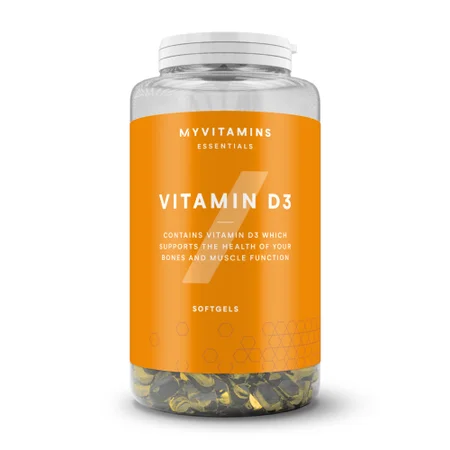
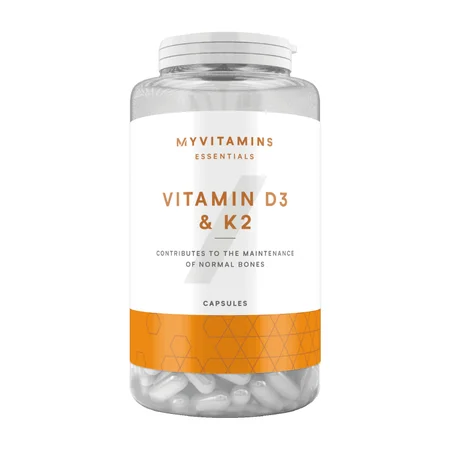
Looking for more ways to hit your nutrition goals? Browse our vitamin D supplements:

Enjoy this article?
READ MORE HERE:




Dr Richie Kirwan is a Senior Lecturer at Liverpool John Moores University, where his research on muscle mass and cardiometabolic health has influenced health policy across the UK, Ireland and the USA. A leading authority on high-protein diets and resistance training, Richie translates complex science into actionable fitness advice. When off duty, you’ll find him in the gym, on the hurling pitch, or the salsa dance floor.
References
- Cashman, K. D., Dowling, K. G., Skrabakova, Z., Gonzalez-Gross, M., Valtuena, J., De Henauw, S., et al. (2016). Vitamin D deficiency in Europe: pandemic? American Journal of Clinical Nutrition, 103(4), 1033–1044.
- Holick, M. F., & Chen, T. C. (2008). Vitamin D deficiency: a worldwide problem with health consequences. American Journal of Clinical Nutrition, 87(4), 1080S–1086S.
- Wang, Y., Zhu, J., & DeLuca, H. F. (2012). Where is the vitamin D receptor? Archives of Biochemistry and Biophysics, 523(1), 123–133.
- Lips, P., Cashman, K. D., Lamberg-Allardt, C., Bischoff-Ferrari, H. A., Obermayer-Pietsch, B., Bianchi, M. L., et al. (2019). Current vitamin D status in European and Middle East countries and strategies to prevent vitamin D deficiency: a position statement of the European Calcified Tissue Society. European Journal of Endocrinology, 180(4), P23–P54.
- Martineau, A. R., Jolliffe, D. A., Hooper, R. L., Greenberg, L., Aloia, J. F., Bergman, P., et al. (2017). Vitamin D supplementation to prevent acute respiratory tract infections: systematic review and meta-analysis of individual participant data. BMJ, 356, i6583.
- Pilz, S., Frisch, S., Koertke, H., Kuhn, J., Dreier, J., Obermayer-Pietsch, B., et al. (2011). Effect of vitamin D supplementation on testosterone levels in men. Hormone and Metabolic Research, 43(3), 223–225.
- Beaudart, C., Buckinx, F., Rabenda, V., Gillain, S., Cavalier, E., Slomian, J., et al. (2014). The effects of vitamin D on skeletal muscle strength, muscle mass, and muscle power: a systematic review and meta-analysis of randomized controlled trials. Journal of Clinical Endocrinology & Metabolism, 99(11), 4336–4345.
- Schöttker, B., Jorde, R., Peasey, A., Thorand, B., Jansen, E. H., Groot, L., et al. (2014). Vitamin D and mortality: meta-analysis of individual participant data from a large consortium of cohort studies from Europe and the United States. BMJ, 348, g3656.
- Alvarez, J. A., & Ashraf, A. (2010). Role of vitamin D in insulin secretion and insulin sensitivity for glucose homeostasis. International Journal of Endocrinology, 2010, 351385.