Collagen supplements promise everything from smoother skin to stronger joints, but the honest answer is more mixed than social media would have you believe. From muscle building to skin health to joint pain, each claim needs its own evidence, and some hold up far better than others.
- What is collagen?
- Where does collagen come from?
- Can collagen help build muscle?
- Does collagen help with joint pain?
- Can collagen improve your skin?
- Does collagen help with tendons, recovery and bones?
- How strong is the evidence for collagen?
- Frequently asked questions
What is collagen?
Collagen is the main structural protein in the human body, found in skin, tendons, ligaments, bones and cartilage. It is the most abundant protein you have, making up roughly a quarter to a third of all the protein in your body.
Your body can make collagen on its own, provided it has enough protein, vitamin C and other key nutrients. A striking example of how important this process is: scurvy, the disease sailors used to develop on long voyages, is caused by a lack of vitamin C. Without vitamin C, the body cannot produce new collagen, and connective tissue gradually loses its integrity, gums bleed, and joints start to break down.

20 Foods Rich In Vitamin C: Benefits And Sources (Besides Oranges)
Boost energy and brighten skin with these foods....
This means you do not necessarily need to eat collagen to make it. If you did, vegans would be in serious trouble, but they do just fine as long as their diet provides sufficient protein and micronutrients.
One of the most common misconceptions about collagen supplements is that swallowing collagen sends it directly to your skin or joints. Like any other protein, it gets digested and broken down into amino acids and small peptides, which the body then uses for whatever it needs. Some of those smaller peptides may have specific effects once absorbed, but it is not a direct delivery system.
Where does collagen come from?
Collagen supplements are a byproduct of the meat, poultry and fish industry. The parts of the animal that are particularly rich in collagen, such as bones, skin, connective tissue and even fish scales, are used to extract it. If you have ever made stock from bones at home and seen the jelly that sets on top once it cools, that is gelatin, which is collagen that has been broken down.
Being a byproduct is not a drawback. Whey protein, one of the highest quality protein supplements available, started life as a byproduct of the cheese industry.
Can collagen help build muscle?
Collagen is not an effective protein for building muscle. To stimulate muscle protein synthesis (MPS), the body needs essential amino acids, particularly leucine. Collagen is an incomplete protein: it is missing one essential amino acid entirely (tryptophan) and is low in several others, including leucine.
Proteins that are far more effective at driving MPS include whey, casein, soy, egg and well-formulated plant protein blends. These tend to work out cheaper per serving, too.
That said, when collagen peptides are taken alongside resistance training, research does show a small but real increase in fat-free mass.1 People taking collagen and lifting weights gained slightly more lean tissue than those lifting and taking a placebo.
There is an important distinction here, though. Fat-free mass is not the same as pure muscle. It includes everything in the body that is not fat: tendons, ligaments, connective tissue and water. So while the increase may be genuinely useful in some contexts, it is not the same as building bigger muscles.
If your main goal is putting on muscle, your protein budget is better spent on high-quality sources like whey, casein or soy. Get total daily protein intake right first, and that is what will make the real difference.
Does collagen help with joint pain?
Among the major claims made for collagen, joint pain and joint function are the areas where the science is most in its favour.
When the trials on collagen and joint pain are pulled together, people taking collagen derivatives tend to experience a small to moderate reduction in pain and a small improvement in how well the joint functions and moves. In one recent trial sequential meta-analysis, the improvement in joint function was rated as high certainty evidence, which in research terms is relatively strong.2 Pain reduction was rated as moderate certainty, a notch below, but still meaningful.
We still cannot fully explain why collagen might help with joint pain. If it were simply about supplying amino acids, any decent protein source should do the same job. One idea is that certain collagen-derived peptides survive digestion, get absorbed, and may act as signals in connective tissue. For undenatured type 2 collagen, another proposed mechanism is oral tolerance, where the immune system may become less reactive to cartilage-related proteins. These mechanisms are still being investigated, but the outcome data for joint pain are more promising than for many other collagen claims.
What these studies generally do not tell us is whether collagen is better than simply increasing intake of other protein sources, because the comparison is usually a placebo or another joint health treatment, not whey, casein, soy or another complete protein.
Collagen is not going to rebuild a joint, and it is not a replacement for the approaches with the strongest evidence, such as staying active, strengthening the muscles around the joint, and managing body weight where relevant. But as something to try alongside those basics for a few months, it is one of the more reasonable supplement options for joint pain.
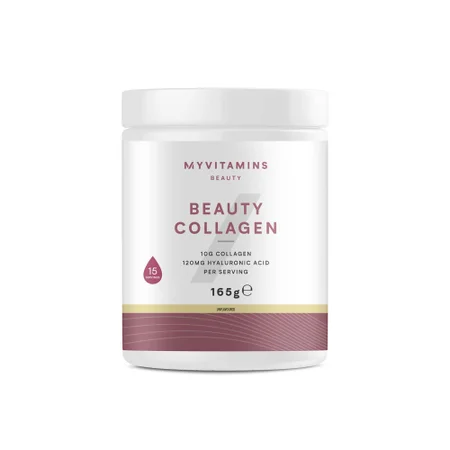
Can collagen improve your skin?
The evidence looks reasonably positive, but with some real limitations.
When the skin trials are pulled together, collagen supplementation does seem to improve skin hydration, skin elasticity, and in some cases even the appearance of wrinkles. This is not nothing, but the science is far from settled.
Many of these studies are short (often just eight to 12 weeks), use small numbers of participants, and a fair proportion are funded by the companies that make the products. That does not automatically make the findings unreliable, but it is something to be aware of.
The outcomes themselves are also harder to measure cleanly. Skin hydration, elasticity and wrinkle depth can be assessed with specialist tools, so it is not just people looking in the mirror and guessing, but they are still messier outcomes than something like body weight or grip strength.
A lot of what affects skin has nothing to do with what you swallow. Sun exposure is the biggest factor, followed by smoking, sleep, stress, skincare routines and hormones. Some trials try to control for these variables, but doing so perfectly over weeks or months is difficult, which makes it harder to be certain how much of the benefit is genuinely down to collagen.
As with joints, collagen does not travel directly from your mouth to your face. It gets digested into amino acids and smaller peptides. The leading hypothesis is that some collagen-derived peptides are absorbed and may act as signals to skin cells called fibroblasts, nudging them towards producing or maintaining components of the skin matrix, including collagen and elastin. That is plausible, and the skin results are promising, but this sits in the "promising but not fully settled" category rather than "everyone needs it."
If fewer fine lines and smoother skin are what you are after, manage your expectations. The effects in studies are modest, not dramatic. The single most powerful thing you can do for your skin does not come in a tub, a sachet, or an expensive little bottle: it is wearing sunscreen and not smoking. If you want to add collagen on top and see how you get on over a couple of months, that is a reasonable thing to try.
Does collagen help with tendons, recovery and bones?
Beyond joints and skin, collagen is sold for a range of other benefits. Here is where the gap between what is claimed and what has been shown becomes much wider.
Tendons and connective tissue
On paper, the idea that collagen peptides might support tendon adaptation makes sense, since tendons are collagen-rich tissues. But tendons adapt mainly to load, not supplements alone, so the more interesting research pairs collagen with targeted loading or resistance training.
There is some early evidence suggesting collagen may support tendon structure, particularly tendon morphology.1 The problem is that the certainty of this evidence is still very low, and the data on tendon mechanical properties (how tendons actually behave under force) are less convincing.1 It is a promising idea worth further research, but nowhere near settled. If you are dealing with a persistent tendon issue, collagen may be a reasonable thing to trial alongside rehab, but do not expect it to do the heavy lifting on its own.
Exercise recovery and muscle soreness
Collagen mostly does not show a meaningful benefit over placebo when it comes to feeling less sore after training. There is a small signal for reactive strength recovery after 48 hours, but the certainty is low and the findings are not consistent across studies.1 If you are buying collagen specifically to recover faster, the evidence is not there yet.
Bones
There is one well-conducted year-long trial in post-menopausal women who already had age-related reductions in bone density.3 They took 5g per day of a specific collagen peptide and showed improved bone mineral density at specific bone regions compared with a placebo (maltodextrin).3
This is interesting, but it is a very specific population, one specific ingredient, and one specific outcome. It would not be reasonable to assume it applies to a 25-year-old who lifts weights, or to every collagen product on the shelf.
Other claims
Collagen is also marketed for gut health, thicker hair, stronger nails, blood sugar management and more. For most of these, the evidence is either early, thin, mixed, based on small or uncontrolled studies, or simply not strong enough to justify the confidence behind some of the claims. It is not that these benefits are impossible; it is that expectations have moved far ahead of the science.
The pattern to notice is this: the further you get from a few plausible targets like joints, skin and tendons, the weaker the evidence becomes, but the confidence of some people online does not drop one bit.
How strong is the evidence for collagen?
Most collagen studies compare it to a placebo, usually a cheap carbohydrate like maltodextrin. That tells you collagen performs better than not much else, but it does not answer the question most people actually care about: whether collagen is better than simply having a bit more of any other decent protein. An extra scoop of whey or just more food might produce the same result for a fraction of the price. Most studies never test that comparison.
Many of the trials are also small, short, and funded by the companies trying to sell the products. That does not make the findings fake or the companies dishonest; good companies fund good research. But it does mean we want independent, higher-quality studies to back things up, and for collagen, those are exactly what is thin on the ground.
One recent umbrella review (a study of studies of studies) pulled together 16 reviews, over 100 trials, and nearly 8,000 people.4 The headline was positive, and several results did come out in collagen's favour. But of those 16 reviews, only one was rated as high quality. Most were low or critically low quality.4 A review can only ever be as strong as what it contains, so a tidy, positive headline can mask a lot of messiness underneath.
None of this means collagen is worthless. There is genuinely interesting science here, especially around joints and tendons, and it may well turn out to have real benefits. But if this were a new medicine presenting this level of evidence, we would call it promising and ask for better trials, not claim it does everything under the sun.
Frequently asked questions
Do you need to eat collagen to make collagen?
No. Your body produces collagen on its own, provided it has enough protein, vitamin C and other nutrients. Vegans, for example, do not eat collagen but produce it without any issues.
Is collagen a good protein for building muscle?
No. Collagen is an incomplete protein, missing one essential amino acid (tryptophan) and low in leucine, the key driver of muscle protein synthesis. Whey, casein, soy and egg are all far more effective for muscle building.
What is the strongest evidence for collagen supplements?
Joint pain and function have the most supportive research, with a large meta-analysis rating the improvement in joint function as high certainty evidence.2 Skin benefits are promising but less firmly established.
Can collagen replace sunscreen for skin health?
No. The most effective things you can do for your skin are wearing sunscreen and not smoking. Collagen may offer modest benefits on top of those basics, but it is not a substitute for sun protection.
Is collagen better than other proteins?
There is not enough evidence to say so. Most collagen studies compare it to a placebo rather than another protein source, so we do not know whether the benefits are specific to collagen or would also occur with any decent protein.
Does collagen work for hair, nails and gut health?
The evidence for these claims is either early, thin, or based on small and poorly controlled studies. It is not that these benefits are impossible, but the science has not caught up with the marketing.
Take home message
Collagen has some genuinely promising research behind it, particularly for joint pain and function, with more modest evidence for skin and tendons. However, the evidence for muscle building, exercise recovery and most other marketed claims is either weak or too early to draw firm conclusions.
Most studies compare collagen to a placebo rather than another protein, so it is not yet clear whether it offers anything beyond what a good diet and a quality protein source would provide. If you want to try collagen for joints or skin, a few months is a reasonable trial period, but get the basics right first: enough total protein, regular exercise, sunscreen, and adequate sleep.





- Bischof, K., Moitzi, A. M., Stafilidis, S., & König, D. (2024). Impact of collagen peptide supplementation in combination with long-term physical training on strength, musculotendinous remodeling, functional recovery, and body composition in healthy adults: A systematic review with meta-analysis. Sports Medicine, 54, 2865–2888. https://doi.org/10.1007/s40279-024-02079-0
- Liang, C.-W., Cheng, H.-Y., Lee, Y.-H., Liao, C.-D., & Huang, S.-W. (2024). Efficacy and safety of collagen derivatives for osteoarthritis: A trial sequential meta-analysis. Osteoarthritis and Cartilage, 32(5), 574–584. https://doi.org/10.1016/j.joca.2023.12.010
- König, D., Oesser, S., Scharla, S., Zdzieblik, D., & Gollhofer, A. (2018). Specific collagen peptides improve bone mineral density and bone markers in postmenopausal women — A randomized controlled study. Nutrients, 10(1), 97. https://doi.org/10.3390/nu10010097
- Ravindran, R., Pizzol, D., López-Gil, J. F., Rahmati, M., Boyer, L., Fond, G., Butler, L., Stellato, A., Gawronska, J., Barnett, Y., Keyes, H., Soysal, P., Eren, R., Onal, B., Yon, D. K., & Smith, L. (2026). Collagen supplementation for skin and musculoskeletal health: An umbrella review of meta-analyses on elasticity, hydration, and structural outcomes. Aesthetic Surgery Journal Open Forum, 8, ojag018. https://doi.org/10.1093/asjof/ojag018