You've cleaned up your diet, you're training regularly, and you're eating all the right things. So why do you still feel absolutely shattered? It's one of the most common questions nutritionists get asked, and the answer is rarely as simple as a missing vitamin.
- Is your diet actually as good as you think?
- Vitamin B12 deficiency and tiredness
- Iron deficiency and fatigue
- Vitamin D and energy levels
- Magnesium and tiredness
- Why sleep matters more than supplements
- Overtraining and undereating
- Stress and chronic fatigue
- Frequently asked questions
Is your diet actually as good as you think?
A diet that looks healthy and a diet that's nutritionally complete can be two very different things. You can eat nothing but whole, unprocessed food and still end up short on nutrients your body needs, usually because somewhere along the way an entire food group gets quietly cut out.
A big part of the problem is where people get their idea of "healthy" from. A diet having a good reputation on social media doesn't mean it's well balanced. It means it's popular. Some of the most hyped diets out there are brilliant at looking disciplined and impressive while leaving you low on key nutrients.
The only way to know what you're really eating is to look at it properly. Most of us forget snacks, underestimate portions of foods we should eat less of, and overestimate portions of foods we should eat more of. We assume we're getting variety when we're really eating the same three meals on repeat.
If you've never tracked your food, including vitamins and minerals, even just for a few days, you might be surprised at what's missing. Plenty of apps will break your intake down into not just calories but the actual micronutrients you're getting. And if you want to go a step further, a registered dietitian or nutritionist can spot gaps you'd never notice yourself.
Diets that quietly cause problems
Unexpected tiredness often starts when a diet cuts out a food group or massively narrows what you're allowed to eat. In doing that, it quietly removes a source of nutrients you didn't realise you were relying on. The diet feels healthy and you're still eating good food, but the gap builds up slowly over weeks and months until you're dragging yourself through the day.
The more you narrow what you eat, the more likely you are to miss an essential nutrient. Fewer food groups means fewer sources of nutrients and a higher chance that one slips below where it should be. Very low calorie crash diets, ultra-low carb diets that cut out whole categories of food, and elimination diets where you've dropped multiple foods to chase a symptom can all create these gaps.
The takeaway isn't that any one particular diet is bad. It's that the more food groups you remove, the more deliberate you have to be about filling the nutritional gaps. Cut something out and you have to consciously replace what it was giving you.
Vitamin B12 deficiency and tiredness
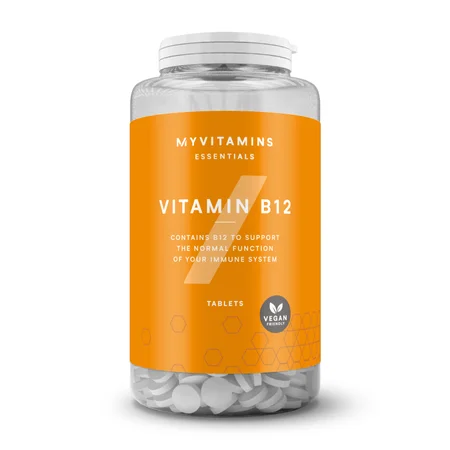
The most obvious example of a diet-related gap is going fully plant-based or vegan without planning it properly. A well-planned vegan or vegetarian diet can be one of the healthiest diets around, but there's one nutrient that catches people out more than any other: vitamin B12.
B12 is found almost entirely in animal foods like meat, fish, eggs and dairy.1 Most animal feed is also supplemented with B12 to make sure the animals get enough, so humans aren't the only species that can run low and need supplementation. B12 is effectively absent from virtually every plant except for some seaweed products.1
If you cut out animal products and you're not getting B12 from fortified foods or a supplement, you will eventually run low. One of the very first symptoms of B12 deficiency is fatigue: real, persistent, bone-deep tiredness. That's because B12 is essential for making healthy red blood cells, and without enough of them your body struggles to move oxygen around properly.2
The frustrating part is that B12 deficiency creeps up slowly. Your body keeps a store of it, so you can coast by for quite a while, even years, before it runs out. People who've been plant-based for a year or two feel increasingly tired and never think to check the one nutrient their diet is almost guaranteed to be short on.3
Iron deficiency and fatigue
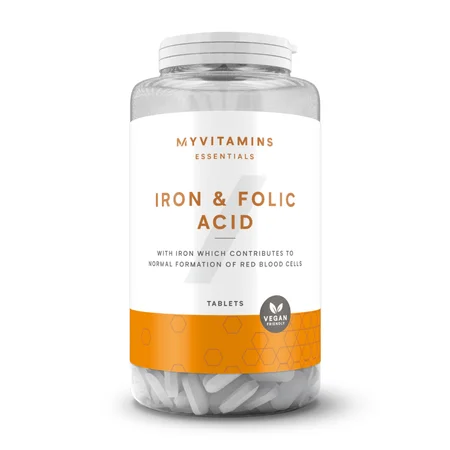
Iron is an essential component of haemoglobin, the protein that lets your red blood cells carry oxygen. When you're low on iron, everything feels harder and you feel tired and weak. You can get iron from plants, but the type in plant foods is harder for your body to absorb than the type in meat, so plant-based eaters may need to work harder to get enough.
Iron deficiency isn't just a vegan issue. It's one of the most common nutritional shortfalls in the general population, especially in women because of monthly losses through menstruation. In the UK, around a quarter of younger and midlife women don't even hit the minimum recommended iron intake from their food.4
You don't need a full-blown iron deficiency to feel the effects. There's good evidence that women who are low in iron, but whose blood counts still look technically normal, feel noticeably less fatigued when their iron intake is topped up.5,6,7 You can have normal blood results but still be running low on iron stores and still feel wiped out because of it.
That's exactly why a proper blood test that checks your iron stores, not just your overall blood count, is so useful. Measuring haemoglobin can tell you whether you have a full-blown deficiency, but your body protects haemoglobin levels for as long as it can while your stored iron runs low. Measuring ferritin, which reflects your stored iron, can pick up on low iron before it reaches that point.
One quick caveat: ferritin can read falsely high if you're fighting off an infection or dealing with inflammation, so it's not something to interpret on your own. That's a conversation to have with your doctor, who can put the number in context. Importantly, iron is not something you should start supplementing blindly. Too much iron can be a real problem, so this is a get-tested-first situation, not a guess-and-hope situation.
Vitamin D and energy levels
Full-blown nutrient deficiencies that show up clearly on a blood test are fairly uncommon in a country like the UK. What's far more common is sitting in the grey zone where your intake of something isn't disastrously low, but it's not really enough either. That lower-than-ideal zone can be where a lot of low-level, nagging tiredness comes from.
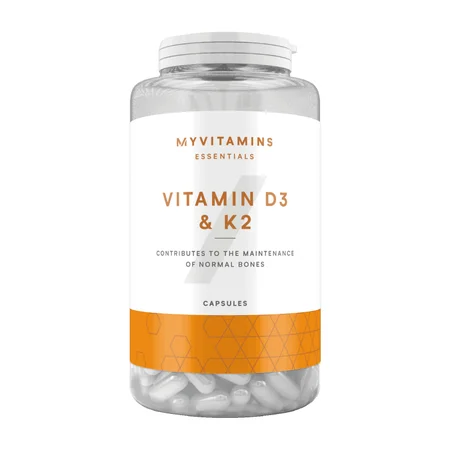
Vitamin D is a good example. In Ireland and the UK, your skin produces it from sunlight, but from about October through to March the sun isn't strong enough to do the job. A lot of people spend most of their time indoors anyway, so low vitamin D is genuinely common over winter. That's why the official advice is that most people should consider a supplement during those months.8
There is some trial evidence that when people who are genuinely deficient and feeling fatigued get their levels corrected, their fatigue improves.9,10 So if you're truly low, topping up can help. What the evidence does not support is the idea that loading up on vitamin D when your levels are already fine will give you some big energy boost. It won't. It's a fix for a deficiency, not a free upgrade. But given how common low vitamin D is in winter, it's a reasonable one to check.

Multivitamins Explained: Who Really Needs Them?
A practical guide to multivitamins, daily requirements and nutrient gaps....
Magnesium and tiredness
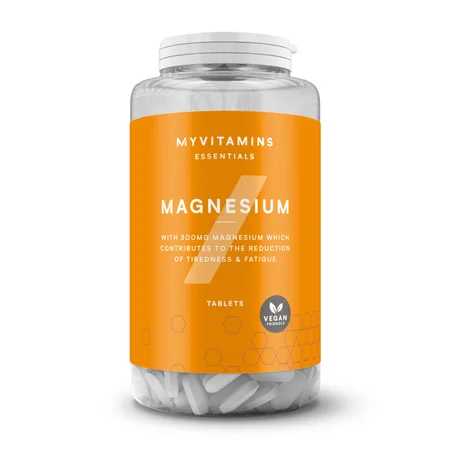
Magnesium is genuinely important for producing energy at the cellular level. Your body literally can't use its main energy molecule without it.11 Intakes in the UK aren't always great, with a decent chunk of younger adults falling below the recommended intake amounts.4
But the fact that magnesium is involved in energy production does not mean that swallowing a magnesium supplement will fix your tiredness, unless you're actually low to begin with. The evidence for magnesium supplementation reducing fatigue, even in people who don't get enough, is very thin.
By all means, make sure your diet has plenty of magnesium in it: lots of green veg, nuts, seeds and whole grains. But don't expect a magnesium supplement to be the answer to feeling shattered if your levels are fine. And that's really the theme across all of these nutrients. A genuine deficiency can absolutely make you feel tired, and fixing it will help. But supplementing something you weren't short on in the first place does basically nothing. Testing beats guessing every single time.
Why sleep matters more than supplements
For a lot of people who feel tired all the time, the problem isn't diet at all. Sleep is the obvious one that everyone underestimates, and not just how many hours, but how much good-quality sleep you're actually getting. You can be in bed for eight hours and still be wrecked if that sleep is broken, shallow, or shoved into the wrong part of your day.
Not getting enough proper sleep affects basically every system in your body: your hormones, your appetite, your concentration, your mood, and your energy. No supplement on earth can fix that. If you're sleeping badly, you will feel tired. Full stop.
Loads of people are quietly sabotaging their own sleep without realising. The two biggest culprits are caffeine and alcohol. Caffeine has a half-life of around five hours,12 so it hangs around in your system for longer than people think. That afternoon coffee can still be messing with your ability to fall into deep sleep hours later. Alcohol is sneaky because a few drinks might help you nod off, but they wreck the quality of the sleep that follows.13 You wake up feeling like you barely rested at all.
Overtraining and undereating
This one is especially relevant for gym-goers. There's an idea that more is always better, that if you're tired you just need to push through and grind harder. But your body adapts and gets stronger during recovery, not during the session itself. If you're training intensely day after day, never taking rest days and sleeping badly on top of it, you can dig yourself into a hole where you're constantly fatigued, your performance stalls, and you feel flat all the time.
If you're training hard but not eating enough to fuel that training, you create a genuine energy shortfall. Persistent tiredness is one of the first things to show up. People think eating less and training more is the disciplined, optimal thing to do, but done to excess it's actually a recipe for feeling exhausted, run down, and getting injured or ill more often.
Stress and chronic fatigue
Chronic, grinding, never-switches-off stress is genuinely exhausting. Work stress, money stress, life stress... your body's stress response is designed to fire up and then switch off again once the threat passes. The problem is that in modern life it never really switches off. Many people are in a low-level state of stress all day, every day, and that drains you mentally, disrupts your sleep, and leaves you feeling tired in a way that no nap can fix.
Most people aren't dealing with just one of these factors. They're dealing with all of them at once. We work long hours, we're permanently switched on, we sleep too little, we train hard because we're told to optimise everything, we lean on caffeine to get going and maybe have a drink or two to wind down, and we're under constant low-level stress the entire time. Then we sit there genuinely confused about why we feel exhausted and go looking for the answer in a supplement or a tweak to our macros.
There's a real irony in the optimising culture. People chase the perfect diet, the perfect supplement stack and the perfect routine while doing the three things guaranteed to make them tired: undersleeping, overtraining and never switching off. You can't out-eat a lifestyle that's wearing you down.
Frequently asked questions
Can you feel tired from low iron even if your blood test looks normal?
Yes. You don't need a full-blown deficiency for low iron to affect your energy. Women who are low in iron but whose blood counts still look technically normal feel noticeably less fatigued when their iron intake is topped up.5,6,7 A test that measures ferritin (stored iron) rather than just haemoglobin can pick up on low iron earlier.
Should I take a vitamin D supplement for tiredness?
If you're genuinely deficient, correcting your vitamin D levels can improve fatigue. But loading up on vitamin D when your levels are already fine won't give you an energy boost. In the UK and Ireland, the official advice is to consider supplementing from October through March when sunlight is too weak for your skin to produce enough.
Does magnesium help with tiredness?
Magnesium is involved in energy production at the cellular level, but the evidence for magnesium supplements reducing fatigue is very thin, even in people who don't get enough. Focus on dietary sources like green vegetables, nuts, seeds and whole grains rather than expecting a supplement to fix your tiredness.
Why am I still tired even though I eat healthily?
A diet that looks healthy can still have nutritional gaps, especially if it's restrictive or repetitive. But for many people, the real issue isn't diet at all. Poor sleep quality, overtraining without adequate recovery, undereating relative to training demands, and chronic stress are all common causes of persistent tiredness that no dietary change can fix.
Can caffeine and alcohol make tiredness worse?
Yes. Caffeine has a half-life of around five hours,12 so an afternoon coffee can still disrupt deep sleep hours later. Alcohol may help you fall asleep but it wrecks the quality of sleep that follows. If you're drinking coffee late in the day or having a few drinks most evenings, that could be a significant part of the problem.
Take home message
Feeling tired despite eating well is one of the most common frustrations people bring to a nutritionist, and the answer usually isn't as simple as a single missing nutrient. Genuine deficiencies in B12, iron, vitamin D or magnesium can cause fatigue, but supplementing something you're not short on does basically nothing. Testing beats guessing every time.
For many people, the real cause of persistent tiredness has nothing to do with food. Poor sleep quality, overtraining, undereating relative to training demands, and chronic stress are all far more likely culprits. You can't out-eat a lifestyle that's wearing you down.

- Watanabe F, Yabuta Y, Bito T, Teng F. Vitamin B12-containing plant food sources for vegetarians. Nutrients. 2014;6(5):1861-73.
- Stabler SP. Clinical practice. Vitamin B12 deficiency. N Engl J Med. 2013;368(2):149-60.
- Pawlak R, Lester S, Babatunde T. The prevalence of cobalamin deficiency among vegetarians assessed by serum vitamin B12: a review of literature. European Journal of Clinical Nutrition. 2014;68(5):541-548.
- Derbyshire E. Micronutrient Intakes of British Adults Across Mid-Life: A Secondary Analysis of the UK National Diet and Nutrition Survey. Frontiers in Nutrition. 2018;5:55.
- Verdon F, Burnand B, Stubi CLF, et al. Iron supplementation for unexplained fatigue in non-anaemic women: double blind randomised placebo controlled trial. BMJ. 2003;326(7399):1124.
- Vaucher P, Druais PL, Waldvogel S, Favrat B. Effect of iron supplementation on fatigue in nonanemic menstruating women with low ferritin: a randomized controlled trial. CMAJ. 2012;184(11):1247-1254.
- Houston BL, Hurrie D, Graham J, et al. Efficacy of iron supplementation on fatigue and physical capacity in non-anaemic iron-deficient adults: a systematic review of randomised controlled trials. BMJ Open. 2018;8(4):e019240.
- Scientific Advisory Committee on Nutrition. Vitamin D and Health. London: TSO; 2016.
- Nowak A, Boesch L, Andres E, et al. Effect of vitamin D3 on self-perceived fatigue: A double-blind randomized placebo-controlled trial. Medicine. 2016;95(52):e5353.
- Roy S, Sherman A, Monari-Sparks MJ, et al. Correction of Low Vitamin D Improves Fatigue: Effect of Correction of Low Vitamin D in Fatigue Study (EViDiF Study). North American Journal of Medical Sciences. 2014;6(8):396-402.
- Romani AMP. Cellular magnesium homeostasis. Archives of Biochemistry and Biophysics. 2011;512(1):1-23.
- Alsabri SG, Mari WO, Younes S, Elsadawi MA, Oroszi TL. Kinetic and dynamic description of caffeine. Journal of Caffeine and Adenosine Research. 2018;8(1):3-9.
- Ebrahim IO, Shapiro CM, Williams AJ, Fenwick PB. Alcohol and sleep I: effects on normal sleep. Alcoholism: Clinical and Experimental Research. 2013;37(4):539-549.