
Instant overview
- Muscle growth requires a consistent mechanical stimulus paired with a structured, high-frequency training schedule.
- Rest days and deep sleep are biochemically necessary for muscle tissue repair, fat adaptation, and central nervous system recovery.
- A balanced caloric surplus fueled by nutrient-dense whole foods is essential for sustained muscular hypertrophy.
- Choosing between a bro split, upper/lower split, or push/pull/legs (PPL) split depends on your training history, recovery capacity, and weekly schedule.
Whether you are taking your first steps into strength training or you have hit a frustrating progress wall with your current routine, structuring your training week correctly is paramount. Competitive bodybuilder and expert personal trainer Chris Broomhead breaks down the physiological rules of muscle hypertrophy before diving into the mechanics of popular training setups. By aligning your training frequency with optimized nutrition, strategic supplementation, and dedicated recovery periods, you can maximize your results and build clean muscle mass efficiently.
Training splits at a glance
| Training split | Recommended weekly frequency | Target experience level | Primary training advantage |
|---|---|---|---|
| The "Bro" Split | 5 days per week | Intermediate to advanced | Maximises localized volume and metabolic pump by targeting one major muscle group per session. |
| Upper / Lower Split | 3 to 4 days per week | Novice to intermediate | Offers exceptional scheduling flexibility while ensuring balanced systemic recovery. |
| Push, Pull, Legs (PPL) | 6 days per week (cyclical) | Intermediate to advanced | Doubles annual muscular training stimuli (104 vs 52 target days) for rapid development. |
Whether you’re starting out on your gym journey or you’ve hit a brick wall with your training, expert PT Chris Broomhead is on hand with advice to help you power through. As a competitive bodybuilder, Chris knows a thing or two about building muscle, so tune in. In the video, he covers the basics behind muscle growth before getting into the good stuff — the most effective training splits for building muscle.
Foundations of muscle growth
Creating a mechanical stimulus
If you don’t create a stimulus through effective training, nothing else can work to build muscle. It’s the catalyst for everything else that comes after. By “stimulus”, Chris means executing a targeted, progressive training schedule that consistently challenges your muscle fibres.
Prioritising sleep
Often overlooked — it’s always one more episode of TV, or five more minutes of scrolling. But sleep is absolutely essential when you’re trying to recover. Put your phone down, step away from the screen, and ensure you get adequate rest to allow tissue regeneration.
Optimising your diet
To grow, you must provide your body with the clean nutrients and energy it demands. Don't be afraid of a calculated calorie surplus — you need those extra calories to fuel intense sessions and synthesise new tissue. However, do not use this as an excuse to eat poorly. You need to fill your diet with nutrient-dense whole foods, not just empty calories. A fast-food breakfast every day will not provide the vital micro-elements your body requires to perform, regardless of your caloric intake.
Smart supplementation
Everyone has to start somewhere — no one expects you to drop a fortune on a fully stocked supplement cupboard right away. Start with the foundational basics, such as a high-quality protein powder or creatine, and build up your regimen over time as your training evolves.

24-Hour Supplement Guide | What To Take To Build Muscle
Make the most out of your gym sessions by fuelling right....
Scheduled rest and recovery
As well as training hard and eating well, you must take regular rest days. A common misconception in fitness culture is that pushing yourself constantly without a break yields faster results. In reality, if you do not give your muscles time to rest, recover, and repair, you will stall your progress and increase your injury risk.
How to split your training to build muscle
The “bro” split
Don’t be put off by the name; this remains one of the most popular training variations worldwide. This split-style method involves targeting one specific body part per workout session. For example, Monday is chest, Tuesday is back, Wednesday is shoulders, Thursday is arms, and Friday is dedicated to legs.
While this high-volume method is highly effective for localized muscle hypertrophy, lifters looking to maximize growth long-term may eventually want to transition toward a higher-frequency training programme.
The upper / lower split
If you have fewer days to dedicate to the gym each week, you can split your muscle groups more efficiently. If you can commit to three training days per week, an excellent approach is alternating upper body, lower body, and upper body sessions. Alternatively, three full-body days can work exceptionally well depending on your experience level.
If you are entirely new to resistance training, dedicating an entire workout to a single muscle group like your chest can cause excessive muscle damage. Instead, a three-day full-body routine that incorporates one or two multi-joint compound exercises per muscle group provides a far better introductory stimulus. As you progress and build structural baseline strength, you can add a fourth training day, allowing for two dedicated upper days and two lower days per week. This naturally facilitates progressive overload by introducing more training volume over time.
The push, pull, legs split
The push, pull, legs (PPL) split is one of the most efficient set-ups available. Typically, you train for three consecutive days, take a dedicated rest day, and then repeat the three-day cycle. This approach allows you to train every major muscle group with much greater frequency throughout the calendar year.
To put this into perspective: if you follow a traditional routine training each muscle group only once per week, you accumulate **52 days** of growth stimulus per muscle group annually. By shifting to a cyclical push, pull, legs structure, you double that exposure to **104 days** of training per muscle group each year.

Master the Push, Pull, Legs Workout Split for Muscle Growth
The most efficient workout split for building mass....
Here is how each targeted block is broken down:
A push workout: Targets the anterior chain pushing mechanics, focusing directly on the chest, shoulders, and triceps. A pull workout: Focuses entirely on the posterior upper body chain, engaging the back, rear delts, and biceps. A leg workout: Dedicates a complete session to the lower body, building size and power across the quads, hamstrings, glutes, and calves using targeted leg exercises.
Take-home message
Chris has provided a diverse array of foundational blueprints to help layout your weekly fitness schedule. Ultimately, the best training split is the one that aligns with your lifestyle, permits consistent progression, and honors your body's recovery requirements. Choose your split, hit your nutritional targets, rest adequately, and execute your plan with consistency.



SET YOURSELF UP FOR YOUR TRAINING WEEK WITH THESE:

5 Best Shoulder Exercises To Build Size & Strength
Build well-rounded delts with these five expert-approved moves....

Target Your Delts With 4 Simple Moves | Myprotein Masterclass
Prepare yourself for the DOMS....

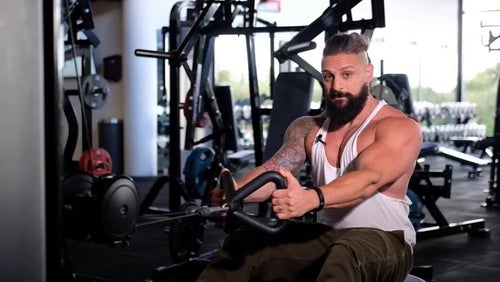
Back Day With Lex Griffin | Myprotein Masterclass
The key to accurately targeting your back....

Five Best Deadlift Variations | Myprotein Masterclass
They're sure to target your glutes....

Five Exercises For Targeting Glutes | Myprotein Masterclass
A workout to set your glutes on fire....

Five Lunge Variations To Spice Up Your Leg Day | Myprotein Masterclass
Go wild for your next lower body day....