Fish oil is one of the most popular supplements around, but standing in front of a shelf of capsules, liquids, krill oils and gummies, it's not always obvious which one to pick... or how many you should actually be taking.
The short answer: look at the EPA and DHA on the label, not the amount of fish oil, then choose the form that you'll actually take every day. Here's how to do that, plus a guide to our Myprotein omega-3 range.
Jump to:
- How to choose a fish oil supplement
- Capsules, liquid, krill and other forms
- Our omega-3 range
- How much fish oil should you take?
- FAQs
What is a fish oil supplement?
A fish oil supplement is a concentrated source of two long-chain omega-3 fatty acids: EPA (eicosapentaenoic acid) and DHA (docosahexaenoic acid). These are the omega-3s found in oily fish like salmon, mackerel, sardines and trout.
The NHS recommends at least two portions of fish a week, including one of oily fish, but many of us aren't eating this much.1 A supplement is an easy way to top up your EPA and DHA on the weeks you fall short.
Want to know what EPA and DHA actually do? Our nutritionist Richie Kirwan covers it in the benefits of fish oil and why you need omega-3.
How to choose a fish oil supplement
The best fish oil supplement for you is the one that gives you enough EPA and DHA in a form you're happy to take every day. These four checks will get you there.
Check the EPA and DHA, not the fish oil
This is the big one. A "1,000mg fish oil" capsule doesn't contain 1,000mg of omega-3. The EPA and DHA are only part of the oil, so always look for the EPA and DHA figures in the nutrition panel and add them together.
As a guide, 250mg of EPA and DHA a day contributes to the normal function of the heart.4 Some products get there in one capsule, but others need several.
Choose a form you'll stick to
Capsules are the easiest to take, liquids are taken by the spoonful, and gummies are handy if you don't like swallowing capsules. There's more on each form below.
Look at the source
Most omega-3 supplements come from oily fish. Krill oil comes from tiny crustaceans, cod liver oil comes from the liver of cod, and vegan omega-3 comes from algae. Each has a slightly different nutrient profile, so it's worth knowing which you're buying, especially if you have a fish or shellfish allergy.
Check what else is in it
Cod liver oil is naturally high in vitamin A, which matters if you're pregnant or already take a multivitamin (see how much fish oil should you take?). Many fish oils also include vitamin E as an antioxidant to protect the oil.

Fish oil capsules, liquid, krill and other forms
Fish oil comes in several forms. Here's how they compare.
- Softgel capsules: easy to dose and easy to take with you. What people call "fish oil tablets" are almost always softgel capsules.
- Liquid fish oil: taken by the spoonful, usually a teaspoon. Good if you don't like swallowing capsules.
- Krill oil: omega-3 from Antarctic krill, partly in the form of phospholipids. Doses of EPA and DHA per capsule are smaller than in fish oil.
- Cod liver oil: a smaller amount of EPA and DHA, plus vitamins A and D.
- Algae oil: the vegan alternative, getting DHA from the same place fish do... algae.
- Omega 3-6-9 blends and gummies: a mix of oils, often including plant oils such as flaxseed, which give you ALA (a plant omega-3) rather than EPA and DHA.
Our omega-3 range
Here's our range of Myprotein omega-3 supplements, and what's in each one. You can browse them all in our omega-3 and fish oils category.
Essential Omega-3: cost-effective and convenient
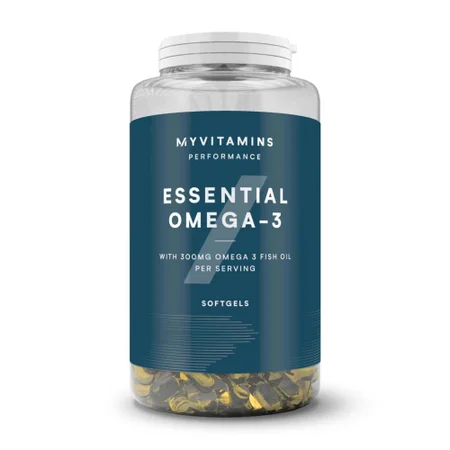
Essential Omega-3 is a cost-effective, convenient way to get EPA and DHA. Each softgel gives you 300mg of omega-3, with 180mg of EPA and 120mg of DHA, so one a day covers the 250mg of EPA and DHA that contributes to the normal function of the heart.4 You can take up to three softgels a day with food.
High Strength Omega 3: nearly three times the strength
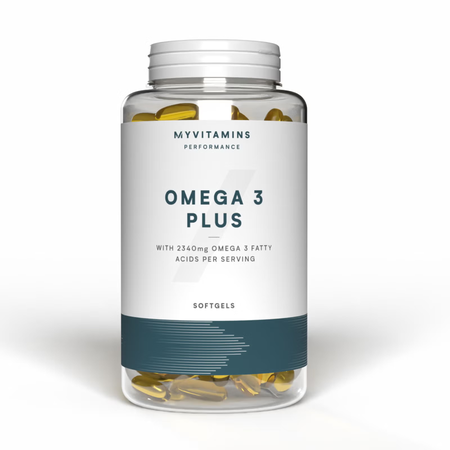
High Strength Omega 3 is for anyone who wants more EPA and DHA without taking a handful of capsules. A daily serving of three softgels gives you 2,340mg of omega-3, including 1,800mg of EPA and 450mg of DHA.
That's 2,250mg of EPA and DHA a day, enough to reach the 2g a day at which EPA and DHA contribute to the maintenance of normal blood triglyceride levels. Don't take more than 5g of EPA and DHA a day from supplements. The 450mg of DHA is also well over the 250mg a day at which DHA contributes to the maintenance of normal brain function and normal vision.4
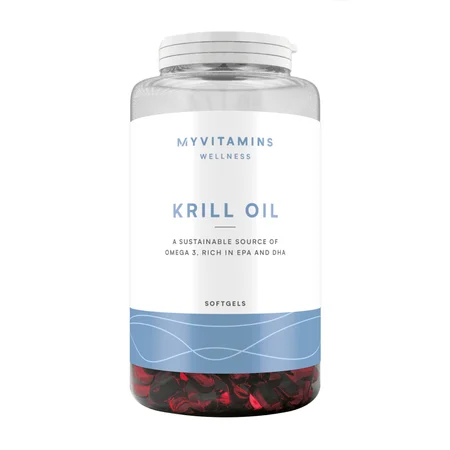
Krill Oil Capsules: omega-3 from Antarctic krill
Our Krill Oil Capsules give you 110mg of omega-3 per softgel, including 60mg of EPA and 28mg of DHA, along with 200mg of phospholipids and 50 micrograms of astaxanthin. Krill is a crustacean, so it isn't suitable if you have a shellfish allergy.
Cod Liver Oil Softgels: omega-3 with vitamins A and D
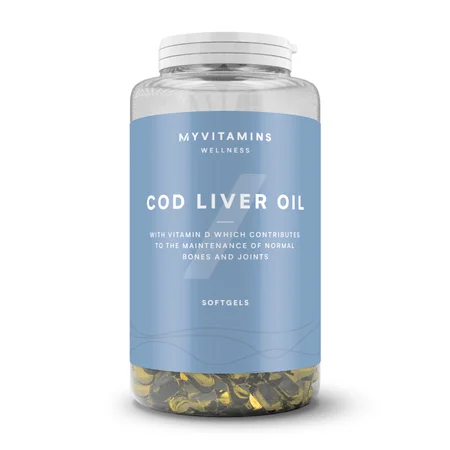
Cod Liver Oil Softgels combine 70mg of EPA and 80mg of DHA with 800 micrograms of vitamin A and 5 micrograms of vitamin D in every softgel. That's 100% of your reference intake for both vitamins, and vitamin A contributes to the normal function of the immune system.4 Read more in our guide to cod liver oil.
Vegan Omega 3: DHA from algae
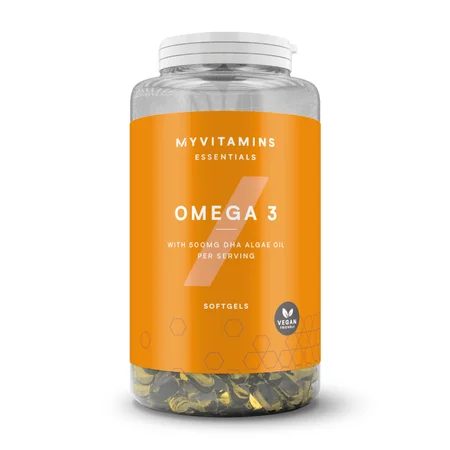
Don't eat fish? Vegan Omega 3 gets its omega-3 from algae oil instead. Each softgel gives you 200mg of DHA, plus 6.8mg of vitamin E.
Omega 3-6-9 Softgels and Gummies: a blend of oils
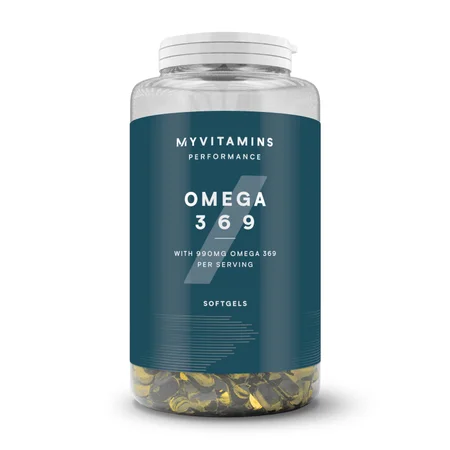
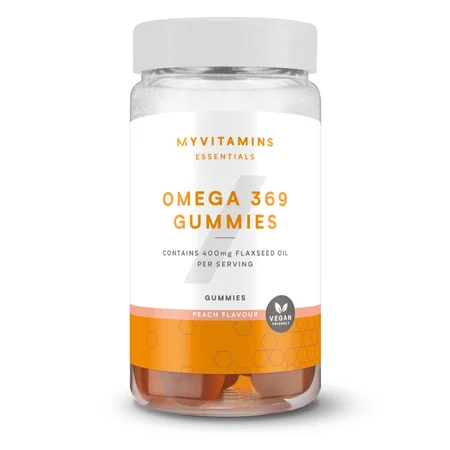
Omega 3-6-9 Softgels combine fish oil, flaxseed oil and sunflower seed oil, with added vitamin E, in one daily softgel. If you'd rather chew than swallow, Omega 3-6-9 Gummies are peach-flavoured and made with flaxseed oil, giving you 200mg of omega-3, 48mg of omega-6 and 60mg of omega-9 in two gummies. Because the omega-3 in the gummies comes from flaxseed, it's ALA rather than EPA and DHA.
How much fish oil should you take?
For most adults, aim for at least 250mg of EPA and DHA combined each day. That's the adequate intake set by the European Food Safety Authority (EFSA)2, and it's also the amount that contributes to the normal function of the heart.4 Always follow the dose on the pack.
Higher intakes are linked to other authorised benefits:4
- 250mg of DHA a day contributes to the maintenance of normal brain function and normal vision.
- 2g of EPA and DHA a day contributes to the maintenance of normal blood triglyceride levels.
- 3g of EPA and DHA a day contributes to the maintenance of normal blood pressure.
EFSA found that supplements giving up to 5g of EPA and DHA a day don't raise safety concerns for adults.3 There's no need to go that high, though, and more isn't automatically better.
When to take extra care
Fish liver oils, including cod liver oil, are high in vitamin A. The NHS advises against taking fish liver oil supplements if you're pregnant or trying for a baby, unless your GP advises otherwise.1 If you take other supplements containing vitamin A, keep your total intake from food and supplements to 1.5mg (1,500 micrograms) a day or less.5
Essential Omega-3 and Omega 3-6-9 Softgels aren't recommended for children, or if you're pregnant or breastfeeding. If you take any medication or have a medical condition, talk to your GP or pharmacist before you start taking fish oil.
How to take fish oil supplements
Take fish oil with a meal. Most of our omega-3 products are best taken with food, and fat-containing meals can help your body absorb omega-3 fats.
There's no best time of day, so pick the one you'll remember: breakfast and dinner both work. If your product's dose is more than one softgel, you can split it across your meals.
Store fish oil in a cool, dry place away from direct sunlight, and keep the lid on.
And don't forget food: oily fish is still the best way to get your omega-3. See our list of foods high in omega-3 for ideas.

16 Foods High In Omega 3

Frequently asked questions
Are fish oil tablets the same as fish oil capsules?
Usually, yes. Fish oil is a liquid, so what's sold as "fish oil tablets" is almost always oil inside a softgel capsule. Compare products by their EPA and DHA content, not by what they're called.
Which is better, fish oil capsules or liquid?
Neither is better in itself. Liquid fish oil is taken by the spoonful, while capsules are easier to take on the go. Compare them by the EPA and DHA per serving, then pick the one you'll take every day.
Is it OK to take fish oil every day?
Yes. Fish oil supplements are designed to be taken daily at the dose on the pack. For most adults, at least 250mg of EPA and DHA a day is a sensible target.
Is cod liver oil the same as fish oil?
Not quite. Fish oil comes from the flesh of oily fish, while cod liver oil comes from the liver of cod. Cod liver oil has less EPA and DHA but is high in vitamins A and D, so it isn't recommended if you're pregnant or trying for a baby.
Can vegans take omega-3 supplements?
Yes. Vegan omega-3 supplements use algae oil instead of fish oil, which gives you DHA without any fish. Omega 3-6-9 products made with flaxseed oil give you ALA, a plant omega-3. In our range, Vegan Omega 3 and Omega 3-6-9 Gummies are suitable for vegetarians and vegans; our other omega-3 products use gelatine.
What's the best fish oil supplement for me?
Essential Omega-3 is a cost-effective, convenient choice. High Strength Omega 3 gives you nearly three times the strength, with fewer capsules. If you don't eat fish, Vegan Omega 3 is made with algae oil.
Take home message
When you choose a fish oil supplement, look at the EPA and DHA, not the fish oil, and aim for at least 250mg of EPA and DHA a day. After that, it's down to the form that suits you best, whether that's capsules, liquid, krill or algae oil.
Find your favourite in our full omega-3 and fish oils range.

Founded in 2004, Myprotein has a long history of fuelling people’s fitness journeys. As the UK’s No. 1 Sports Nutrition Brand and Europe’s No. 1 Sports Nutrition Brand*, our mission is to provide you with reliable, evidence-based information, and our blog features articles from a trusted network of experts across fitness, nutrition and wellness. *Source Euromonitor International Limited; Consumer Health 2026 edition, retail value sales (RSP), all retail channels, 2025 data
References
- NHS. Fish and shellfish. https://www.nhs.uk/live-well/eat-well/food-types/fish-and-shellfish-nutrition/
- EFSA Panel on Dietetic Products, Nutrition and Allergies (2010). Scientific opinion on dietary reference values for fats, including saturated fatty acids, polyunsaturated fatty acids, monounsaturated fatty acids, trans fatty acids, and cholesterol. EFSA Journal, 8(3), 1461. doi:10.2903/j.efsa.2010.1461
- EFSA Panel on Dietetic Products, Nutrition and Allergies (2012). Scientific opinion on the tolerable upper intake level of eicosapentaenoic acid (EPA), docosahexaenoic acid (DHA) and docosapentaenoic acid (DPA). EFSA Journal, 10(7), 2815. doi:10.2903/j.efsa.2012.2815
- Department of Health and Social Care. Great Britain nutrition and health claims (NHC) register. https://www.gov.uk/government/publications/great-britain-nutrition-and-health-claims-nhc-register
- NHS. Vitamin A. https://www.nhs.uk/conditions/vitamins-and-minerals/vitamin-a/