
Ashwagandha has been used in traditional medicine for thousands of years — but it has perhaps never been more relevant than it is today. As interest in its benefits has continued to grow, it has become one of the most widely purchased herbal supplements.
Here is what the current evidence says about what ashwagandha is, how it works, and whether it is worth adding to your routine.
- What is Ashwagandha?
- History of Ashwagandha
- Forms of Ashwagandha
- How Does Ashwagandha Work?
- Benefits of Ashwagandha
- Ashwagandha Dosage
- Ashwagandha FAQs
What is Ashwagandha?
Ashwagandha, also known as Indian ginseng or winter cherry, is a popular herb in Ayurvedic medicine, a form of traditional Indian medicine focused on natural healing.
Its roots are most commonly used in supplements and traditional remedies, and its potential health benefits are said to include reduced stress and anxiety, and improved cognitive and immune function.1
Ashwagandha is an adaptogen, a type of substance believed to help the body adapt to stress and support overall wellbeing.
History of Ashwagandha
Ashwagandha has been used in traditional medicine for thousands of years. Its use can be traced back to ancient Indian Ayurvedic medicine, which dates back over 3,000 years.1
Ashwagandha has traditionally been used to treat a variety of ailments, including arthritis, anxiety, and insomnia. It has also been used as an aphrodisiac and to promote fertility.1
In the early 20th century, scientific research began to explore the medicinal properties of ashwagandha. Studies have found that ashwagandha contains a variety of compounds thought to have a range of health benefits.1
In recent years, ashwagandha has seen a dramatic rise in popularity. It is now one of the most widely purchased herbal supplements in the UK and US, driven by growing consumer interest in stress management, sleep quality, and natural performance support.
Forms of Ashwagandha
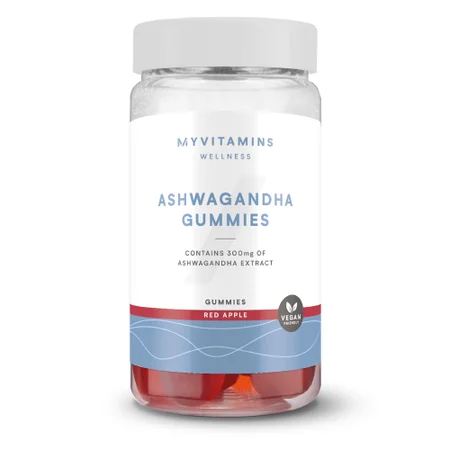
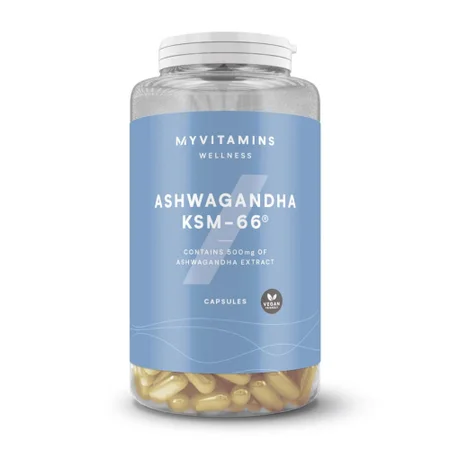
Ashwagandha supplements come in many forms, including capsules, gummies, and powder. It can also be found alongside other vitamins and minerals in combined formulas.

How Does Ashwagandha work?
Ashwagandha contains a variety of biologically active compounds thought to have health benefits, although it's not fully known how they work.1 Current research points to four primary mechanisms:
Cortisol reduction: Ashwagandha is believed to reduce levels of the stress hormone cortisol. Chronically elevated cortisol levels can lead to a range of negative physical and mental health issues. Antioxidant properties: Ashwagandha has been shown to help protect against damage caused by free radicals — unstable molecules that can damage cells. Anti-inflammatory effects: Ashwagandha is believed to help reduce inflammation. Long-term inflammation is a contributing factor to many chronic diseases. Cognitive support: Ashwagandha may have a positive impact on cognitive function, including memory and attention, by helping protect brain cells from damage and promoting the growth of new neural connections.
Benefits of Ashwagandha
Ashwagandha has been studied across a wide range of health outcomes. Here is a summary of what the current evidence suggests.
Ashwagandha may help reduce stress and anxiety
Arguably the most well-known benefit of ashwagandha is its ability to support the body's stress response. While small amounts of stress can be helpful in motivating us and improving our performance, chronic stress can lead to a prolonged increase in cortisol levels — with negative effects on both mental and physical health.
Research suggests that ashwagandha supplementation can help reduce cortisol levels and perceived stress in adults experiencing chronic stress.2
Ashwagandha may support sleep quality
Ashwagandha's stress-reducing properties may also support better sleep. By helping to lower cortisol levels and promote relaxation, it may help those who struggle to switch off at night.
Studies suggest it may improve both sleep onset and overall sleep quality, particularly in individuals experiencing stress-related sleep disruption.1
Ashwagandha may improve strength and recovery
Ashwagandha may also have benefits for exercise performance and recovery. A 2021 meta-analysis found that active, healthy people who took ashwagandha saw improvements in strength, power, cardiorespiratory fitness, fatigue and recovery.3
The STAR trial also found that ashwagandha supplementation led to significant improvements in average squat power, peak bench press power, 7.5km time trial performance, and perceived recovery scores in healthy, active individuals.6
Ashwagandha may support cardiovascular fitness
A 2020 systematic review found that ashwagandha may help improve cardiovascular health. Researchers looked at a range of studies investigating the impact of supplementation on VO2 max in healthy adults and athletes, finding improvements in both groups.5
Ashwagandha may support healthy body composition
Some studies suggest ashwagandha may have a positive impact on body weight and body composition. A 2017 study found that overweight adults who took ashwagandha supplements for eight weeks had a reduction in body weight, BMI, and waist circumference compared to a placebo group.2
It is likely that these effects are partly driven by ashwagandha's impact on stress and sleep, both of which influence metabolism and body composition, rather than a direct fat-burning effect.3
Ashwagandha may support healthy cholesterol levels
Research suggests ashwagandha may have beneficial effects on cholesterol levels and lipid profiles. Studies in both volunteers with pre-existing high cholesterol and healthy volunteers have shown reductions in total cholesterol, triglycerides, and LDL cholesterol following supplementation.4
Ashwagandha may improve attention and memory
Studies suggest ashwagandha may have potential benefits for cognitive function, including attention and memory. These benefits may be related to its anti-inflammatory and antioxidant properties, which may help reduce oxidative stress in the brain, as well as its positive effect on sleep quality and cortisol levels.1
Ashwagandha may support the immune system
Traditional uses of ashwagandha in Ayurvedic medicine include supporting the immune system and preventing illness. Studies suggest ashwagandha may help support immune function, likely through its anti-inflammatory and antioxidant properties, as well as its role in reducing cortisol — since chronic stress is known to suppress immune response.1
Ashwagandha dosage
Most clinical studies on ashwagandha have used doses of between 300mg and 600mg per day, typically as a root extract.1,2 The right dose for you will depend on your goals and the specific product you're using.
Our Ashwagandha Gummies provide a convenient daily dose in just two gummies, while our Ashwagandha KSM-66 Capsules use a clinically studied form of ashwagandha root extract, dosed at one capsule daily.Always consult your GP before taking a new supplement.
Ashwagandha FAQs
When should you not take ashwagandha?
While ashwagandha is generally considered safe for most people, it may not be suitable for people who are or have any of the following:
- Pregnant or breastfeeding
- Thyroid disorders
- Autoimmune conditions
- Taking medication that affects the central nervous system, like sedatives or anti-anxiety medicine, or for high blood pressure or thyroid disorders.
Is ashwagandha safe to take every day and alongside other vitamins?
Ashwagandha is generally considered safe to take every day, and many people take it as a daily supplement. As with any supplement, it's best to consult with your healthcare provider to determine the appropriate dose for you.
There are no well-documented interactions between ashwagandha and common vitamins or minerals. However, because ashwagandha may have a sedative effect at higher doses, caution is advised if taking it alongside other supplements or medications that affect the central nervous system.
Can you take too much ashwagandha?
While there's no official safe upper tolerable limit for ashwagandha, most studies have safely used doses ranging from 250 to 600mg per day. Taking larger doses of ashwagandha may potentially increase the risk of some possible side effects. Some of these may include:
- Gastrointestinal upset, such as nausea, vomiting and diarrhoea
- Headaches
- Dizziness
- Insomnia
Does ashwagandha reduce cortisol?
Research suggests that ashwagandha supplementation can help reduce cortisol levels in adults experiencing chronic stress.
A double-blind, placebo-controlled trial found significant reductions in serum cortisol in participants taking ashwagandha root extract compared to placebo.2
That said, it is not a substitute for addressing the underlying causes of chronic stress.
Does ashwagandha help with sleep?
Ashwagandha may support sleep quality, particularly in those experiencing stress-related sleep disruption. Its stress and cortisol-reducing properties may help promote relaxation and easier sleep onset. Studies suggest benefits for overall sleep quality with consistent daily use.1
How long does ashwagandha take to work?
This is one of the most common questions about ashwagandha — and the honest answer is that it varies. Most studies showing meaningful benefits have used supplementation periods of eight weeks or more.2,3 Some people report noticing effects on stress and sleep sooner, but consistency is key — ashwagandha is not a supplement with an immediate acute effect.
Take home message
Ashwagandha is one of the most well-researched herbal supplements available, with a growing body of evidence supporting its benefits for stress, sleep, strength, and cognitive health. While more research is needed to fully understand how it works, the current evidence is promising across a wide range of health outcomes.
As with any supplement, consistency is key — and it's always best to consult with a healthcare professional before adding it to your routine, particularly if you have a pre-existing condition or take medication.
READ THESE NEXT:

- Mandlik Ingawale, D. S., & Namdeo, A. G. (2021). Pharmacological evaluation of Ashwagandha highlighting its healthcare claims, safety, and toxicity aspects. Journal of Dietary Supplements, 18(2), 183–226. https://doi.org/10.1080/19390211.2020.1741484
- Choudhary, D., Bhattacharyya, S., & Joshi, K. (2017). Body weight management in adults under chronic stress through treatment with Ashwagandha root extract: A double-blind, randomized, placebo-controlled trial. Journal of Evidence-Based Complementary & Alternative Medicine, 22(1), 96–106. https://doi.org/10.1177/2156587216641830
- Bonilla, D. A., Moreno, Y., Gho, C., Petro, J. L., Odriozola-Martínez, A., & Kreider, R. B. (2021). Effects of Ashwagandha (Withania somnifera) on physical performance: Systematic review and Bayesian meta-analysis. Journal of Functional Morphology and Kinesiology, 6(1), 20. https://doi.org/10.3390/jfmk6010020
- Andallu, B., & Radhika, B. (2000). Hypoglycemic, diuretic and hypocholesterolemic effect of winter cherry (Withania somnifera, Dunal) root. Indian Journal of Experimental Biology, 38(6), 607–609.
- Pérez-Gómez, J., Villafaina, S., Adsuar, J. C., Merellano-Navarro, E., & Collado-Mateo, D. (2020). Effects of Ashwagandha (Withania somnifera) on VO2max: A systematic review and meta-analysis. Nutrients, 12(4), 1119. https://doi.org/10.3390/nu12041119
- Ziegenfuss, T. N., Kedia, A. W., Sandrock, J. E., Raub, B. J., Kerksick, C. M., & Lopez, H. L. (2018). Effects of an aqueous extract of Withania somnifera on strength training adaptations and recovery: The STAR Trial. Nutrients, 10(11), 1807. https://doi.org/10.3390/nu10111807
References: