Caffeine is in almost every pre-workout and energy drink on the market, but what does it actually do? This article covers how caffeine works, what the evidence says about its effects on performance, and what you need to know about dosage, timing and side effects.
Jump to:
- What is caffeine?
- How does caffeine work?
- Caffeine and exercise performance
- Dosage
- Timing
- Side effects
- Tolerance
- Is caffeine banned in sport?
- Frequently asked questions
What is caffeine?
Caffeine is the world's most widely used psychoactive drug, and chances are you've already had some today. It occurs naturally in a number of plants we regularly consume, particularly coffee, tea and cacao.
The caffeine content of drinks varies considerably depending on the variety of beans or leaves used and how the drink is prepared:
- A cup of coffee typically contains 100-200mg of caffeine.
- Regular black tea contains 40-120mg.
- A 500ml can of a popular energy drink typically contains around 160mg.
Because of this variability, caffeine supplements make it much easier to get a precise, consistent dose.
How does caffeine work?
The main way caffeine affects performance is through its role as an adenosine receptor antagonist in the brain and nervous system.
You may recognise adenosine from adenosine triphosphate (ATP), the primary energy currency in cells. When we exercise, ATP gets broken down to release energy, and adenosine is produced as a byproduct. As adenosine builds up, it binds to receptors in the brain, which reduces the concentration of neurotransmitters and causes us to feel tired. Adenosine also plays a key role in making us feel sleepy at night.
Caffeine works by blocking adenosine from binding to its receptors. This allows neurotransmitter concentrations to build up, making us feel more alert and energetic.
Beyond this, caffeine also speeds up muscle contraction and increases heart rate, which means blood reaches your muscles faster, something that matters in intense exercise. It can also reduce feelings of muscle pain and lower our perception of how difficult exercise feels, a measure known as relative perceived exertion (RPE). The combined effect is that it helps you train longer and harder.
Caffeine and exercise performance
Next to protein and creatine, caffeine may be one of the most effective sports supplements available. Here's what the evidence shows across different types of performance:
Endurance
Caffeine can improve endurance performance in sports like cycling, running and skiing by 2-4%.1 The longer the event, the greater the effect tends to be. A 2-4% improvement may not sound significant, but in competitive sport, it can be the difference between winning and losing.
Strength and power
A 2018 meta-analysis found that caffeine increases maximal muscle strength and upper body muscular power.2 The increase in strength may not be dramatic, but it could be enough to help you set a new personal record. Anything that increases training volume and intensity over time has the potential to contribute to muscle growth and strength development.
Caffeine also improves sprint performance and other explosive movements such as jumping, thanks to its effect on power output.
Reaction time and sport-specific performance
Caffeine improves reaction time and mental acuity, which translates into better performance across a wide range of sports including football, rugby, basketball, volleyball and combat sports.
Caffeine and carbohydrates
There is some evidence that taking caffeine and carbohydrates together can speed up glycogen synthesis after exercise. Glycogen is the form of carbohydrate stored in muscles, and levels drop during training. If you exercise twice in a day, combining caffeine with carbohydrates after your first session may help top up muscle glycogen stores before the second.3
It's worth noting that the research supporting this used very high doses of caffeine (8mg per kilogram of body weight), and if you're already eating enough carbohydrates, caffeine may not add any extra benefit in this context.
Dosage
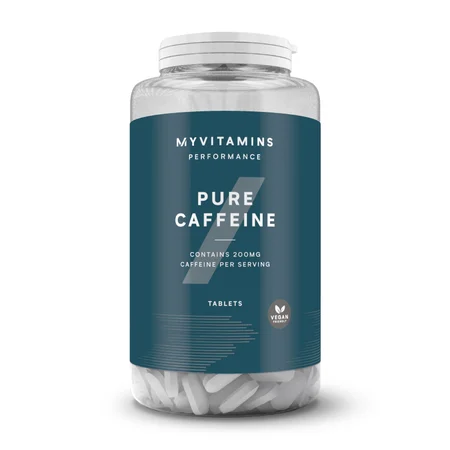
The most commonly used dosage range for caffeine in a sports context is 3-6mg per kilogram of body weight. For someone weighing 70kg, that works out at approximately 210-420mg of caffeine.
It's a good idea to start at the lower end of this range, assess how it feels during training or competition, and increase gradually if needed. Be cautious as you approach the upper end of the range, as this is where negative side effects tend to become more pronounced.
Caffeine supplements come in a range of strengths, so always check the label to confirm how much you're taking.
Timing
Once you take caffeine, it begins entering your bloodstream almost immediately, but it takes time to reach peak concentration in the blood. That usually takes around an hour, which is why it's generally recommended to take caffeine 45 to 60 minutes before the most intense part of your session.
For most people, the most intense part of a session comes at the start, so timing your caffeine intake accordingly gives you the best chance of it peaking when you need it most. If you take it as you walk through the gym door, you may well find the effects are strongest on the way home.
The exception is a very long training session or competition lasting several hours, in which case taking caffeine during the event may also be beneficial.
Side effects
Caffeine is not without its downsides. Excess intake is associated with a number of side effects, including jitters, headaches and disrupted sleep, particularly if taken too close to bedtime.
The half-life of caffeine is around 4-6 hours, meaning it takes that long for the concentration in your blood to drop by half. As a practical example: if you take 300mg of caffeine at 6pm, you could still have around half of that in your system by midnight, which is not ideal for sleep quality.
Everyone processes caffeine at different rates, and there is a significant genetic component to how individuals respond to it. Pay attention to how you react and adjust accordingly. If you find yourself feeling jittery regularly, or feel you need caffeine just to get through a workout, it's worth reducing your intake for a period.
In healthy adults, moderate caffeine consumption of around 400mg per day (roughly the equivalent of two to four cups of coffee, depending on strength) is not associated with adverse health effects. Bear in mind that this total includes caffeine from all sources: coffee, tea and supplements combined.
Tolerance
It is possible to build a tolerance to caffeine with regular use. While the evidence on specific caffeine cycling strategies is limited, it may be worth avoiding high doses at every single training session. Consider saving higher doses for particularly demanding sessions or competitions where the extra boost is most needed.
Is caffeine banned in sport?
For a period of around twenty years, caffeine was classified as a banned substance in competitive sport. Since 2004, it has been permitted, but it remains on the monitoring list. Athletes are still subject to a threshold of 12 micrograms per millilitre of urine, a level that would require consuming far greater amounts than the research-supported performance dose to reach.
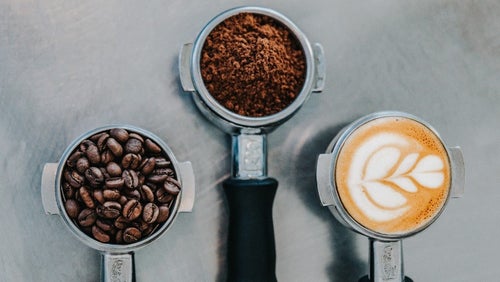
What Are The Benefits Of Caffeine? Give It Up Or Worth The Performance Benefits?
How to figure out if caffeine is worth the side effects for you....
Frequently asked questions
How much caffeine should I take before a workout?
The commonly used range is 3-6mg per kilogram of body weight. For a 70kg person, that's approximately 210-420mg. Start at the lower end and adjust based on how you respond.
When should I take caffeine before training?
Around 45-60 minutes before the most intense part of your session, as this is roughly how long it takes for caffeine to reach peak concentration in the blood.
Does caffeine improve strength as well as endurance?
Yes. A 2018 meta-analysis found that caffeine increases maximal muscle strength and upper body power, in addition to its well-established benefits for endurance performance.2
Can caffeine affect sleep?
Yes. Caffeine has a half-life of around 4-6 hours, meaning significant amounts can remain in your system well into the evening if taken later in the day. Avoiding high doses after midday is a sensible precaution for most people.
Is it possible to build a tolerance to caffeine?
Yes. Regular high-dose caffeine use can lead to tolerance over time. Saving higher doses for key sessions or competitions rather than using them every day may help maintain its effectiveness.
Is caffeine banned in sport?
No. Caffeine was removed from the banned list in competitive sport in 2004. It is currently permitted but monitored, with a threshold of 12 micrograms per millilitre of urine, a level that would require extremely high consumption to reach.
Take home message
Caffeine is one of the most well-evidenced and widely used performance supplements available. At the right dose and timing, it can improve endurance, strength, power, reaction time and perceived effort across a wide range of sports and training types. Start at the lower end of the recommended range, time it correctly, and be mindful of your total daily intake and how close to bedtime you're consuming it. Like any supplement, individual response varies, so take the time to learn what works for you.

10 Best Pre-Workout Foods: What to Eat Before Exercise
A nutritionist's top picks to fuel your workouts. ...
Supplement Guide for Endurance Athletes
The supplements you need to fuel even your hardest workouts....
Guide To Pre-Workout: What Is It? When To Take It?
It's time to re-energise your exercise routine....



References
1. Guest, N. S., VanDusseldorp, T. A., Nelson, M. T., Grgic, J., Schoenfeld, B. J., Jenkins, N. D. M., Arent, S. M., Antonio, J., Stout, J. R., Trexler, E. T., Smith-Ryan, A. E., Goldstein, E. R., Kalman, D. S., & Campbell, B. I. (2021). International Society of Sports Nutrition position stand: Caffeine and exercise performance. Journal of the International Society of Sports Nutrition, 18(1), 1. https://doi.org/10.1186/s12970-020-00383-4
2. Grgic, J., Trexler, E. T., Lazinica, B., & Pedisic, Z. (2018). Effects of caffeine intake on muscle strength and power: A systematic review and meta-analysis. Journal of the International Society of Sports Nutrition, 15(1), 11. https://doi.org/10.1186/s12970-018-0216-0
3. Pedersen, D. J., Lessard, S. J., Coffey, V. G., Churchley, E. G., Wootton, A. M., Ng, T., Watt, M. J., & Hawley, J. A. (2008). High rates of muscle glycogen resynthesis after exhaustive exercise when carbohydrate is coingested with caffeine. Journal of Applied Physiology, 105(1), 7-13. https://doi.org/10.1152/japplphysiol.01121.2007