While GLP-1 medications like semaglutide have helped transform weight management for many, some people find that silencing "food noise" requires more than just a prescription.
But with the right nutritional approach, it's possible to manage the persistent cravings and intrusive thoughts.
Jump to:
- What is food noise?
- How do GLP-1 medications help reduce food noise?
- Tips to help manage food noise
- What foods can help?
- Other important lifestyle factors
- Frequently Asked Questions
- Take Home Message
What is food noise?
Food noise refers to intrusive thoughts about food that can make it difficult to focus on anything else. It might involve persistent cravings, obsessive meal planning, or a preoccupation with what, when, and how much to eat.
This mental chatter is often influenced by factors like blood sugar fluctuations, inadequate nutrition, and restrictive dieting. Habitual eating patterns and emotional triggers also play a significant role in how loud these thoughts become.
For some, food noise is occasional, while for others it can be constant and interfere with daily life. It can become part of an ongoing feedback loop of behaviours and internal narratives that may lead to overeating.
How do GLP-1 medications help reduce food noise?
GLP-1 medications may help manage food noise by stimulating hunger hormones to regulate appetite and reduce cravings. These treatments work by mimicking gut hormones that influence blood sugar control and satiety.
Another key effect of GLP-1 medications is how they influence gastric emptying. By slowing down the rate at which food leaves the stomach, they help you feel full for longer, reducing the frequency of intrusive thoughts.
These medications also influence the brain’s reward response to food. This can make highly palatable, processed foods seem less appealing, providing essential support for those trying to change their habits.
Tips to help manage food noise
Managing food noise with your diet involves eating nutrient-dense foods that fill you up and stabilise blood sugar levels. GLP-1 nutrition focuses on choices that complement the medication's effects to keep cravings at bay.
What to eat on GLP-1
Prioritise protein
Protein-rich meals are useful for curbing food noise because protein takes longer to digest and helps regulate hormones like ghrelin.1 High-quality protein can prevent energy crashes and reduce the urge to snack excessively between meals.
- Lean meat and fish
- Eggs and tofu
- Dairy and legumes
Starting the day with a protein-packed breakfast can set the tone for sustained energy. Options like Greek yoghurt with berries or scrambled eggs with avocado provide a solid foundation for the day ahead.
Focus on volume
High-volume diets focus on increasing the quantity of food consumed without adding excessive calories, essentially aiming to consume the same amount of relative energy intake with a greater total volume of food.2
- Leafy greens and cruciferous vegetables
- Berries and high-fibre fruits
- Broth-based soups
Pairing high-volume foods with protein ensures meals are satisfying and can help reduce absent-minded snacking. You should also pay attention to fluid intake, as dehydration can sometimes be mistaken for hunger.
What foods can help?
Certain foods that support GLP-1 can be especially effective in reducing food noise. These typically work by promoting satiety, stabilising blood sugar levels, or minimising cravings.
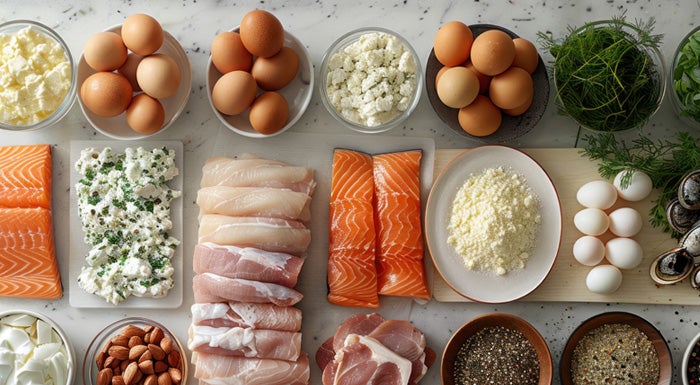
Protein-rich foods & snacks
- Lean meats, poultry and fish: Chicken breast, turkey, and fish like salmon provide high-quality protein to keep you full.
- Eggs: A great source of protein and healthy fats that help regulate hunger hormones.
- Dairy: Greek yoghurt, low-fat cheese, and cottage cheese support gut health and keep cravings at bay.
- Edamame and roasted chickpeas: Protein-packed plant-based snacks that offer a satisfying crunch.
- Protein bars and shakes: Look for options with at least 15-20g of protein and minimal added sugar.
High-volume, fibre-rich foods
- Leafy greens: Spinach, kale, and lettuce help add bulk to meals with minimal calories.
- Cruciferous vegetables: Broccoli, cauliflower, and Brussels sprouts are filling and nutrient-dense.
- Berries: Strawberries and raspberries provide fibre and natural sweetness to curb sugar cravings.
- Chia and flax seeds: Rich in fibre, they expand in the stomach and promote a feeling of fullness.
- Oats: A slow-digesting carb that stabilises blood sugar and reduces hunger spikes.

Healthy fats for satiety
- Avocados: Packed with fibre and monounsaturated fats that help sustain fullness.
- Nuts and nut butters: Almonds and walnuts provide a healthy mix of protein and fats.
- Dark chocolate (85%+ cocoa): A small amount can help curb cravings without a significant blood sugar spike.
Looking for supplements to help support your weight loss? Shop our complete GLP-1 nutrition support range.

Other important lifestyle factors
In addition to diet, lifestyle factors such as sleep, stress, and exercise play a crucial role in reducing food noise. These elements work together to regulate hunger hormones and support overall wellbeing.
The power of sleep
Poor sleep is often a major driver of food noise, as it disrupts the balance of hormones like ghrelin and leptin. When sleep is inadequate, hunger levels rise while feelings of fullness drop, leading to stronger cravings.
Prioritising 7-9 hours of quality sleep each night can help regulate appetite and reduce intrusive thoughts about food. Creating a consistent bedtime routine is a simple but effective way to support your progress.

Managing stress levels
Chronic stress triggers the release of cortisol, which increases cravings for comfort foods and promotes emotional eating. When stress is high, the brain seeks quick energy sources, often leading to increased food noise.
Managing stress through mindfulness, deep breathing, or regular hobbies can help break the cycle of stress-induced cravings. Even small daily habits can make a difference in how you respond to food triggers.
The role of exercise
Regular physical activity plays a crucial role in managing food noise by improving insulin sensitivity and stabilising blood sugar. Resistance training is particularly helpful as it preserves muscle mass and boosts metabolism.
Cardiovascular exercise, such as walking or cycling, can help reduce stress and improve mood. A balanced routine helps curb cravings and reinforces a healthier relationship with food.

Frequently asked questions
What is the best food to eat on GLP-1?
Focus on high-protein and high-fibre foods like lean meats, Greek yoghurt, vegetables and oats. These help maintain fullness and support the medication's effect on digestion.
Why do I still have food noise on GLP-1?
Factors like poor sleep, high stress, or inadequate protein intake can cause food noise to persist. Ensuring you are properly hydrated and rested can help quieten these thoughts.
Can exercise help with food noise?
Yes, regular movement helps stabilise blood sugar and reduce stress, both of which are common triggers for intrusive food thoughts and cravings.
Take home message
Food noise can be incredibly difficult to manage and often contributes to ongoing unhealthy behaviours. GLP-1 medications can help reduce cravings, but they are most effective when combined with balanced nutrition and a healthy lifestyle.
Want more GLP-1 support?
Check out these articles:

Dr. Ishrat worked for the NHS supporting and supervising students and doctors in training. She has experience in general practice, mental health, and women’s health, and has completed a diploma in Women’s Health (obstetrics and gynaecology) as well as a PGCert in medical education and leadership. Dr. Ishrat is also a perinatal GP champion which means she offers specialist support to people who are struggling with their mental health for the first time and people who have seen existing mental health problems exacerbated by pregnancy or parenthood. Working across Greater Manchester, she delivers education and training sessions to improve knowledge and understanding of mental health and provides free access to face-to-face support.
Paddon-Jones, D., Westman, E., Mattes, R. D., Wolfe, R. R., Astrup, A., & Westerterp-Plantenga, M. (2008). Protein, weight management, and satiety. The American journal of clinical nutrition, 87(5), 1558S–1561S. https://doi.org/10.1093/ajcn/87.5.1558S
Rolls B. J. (2017). Dietary energy density: Applying behavioural science to weight management. Nutrition bulletin, 42(3), 246–253. https://doi.org/10.1111/nbu.12280