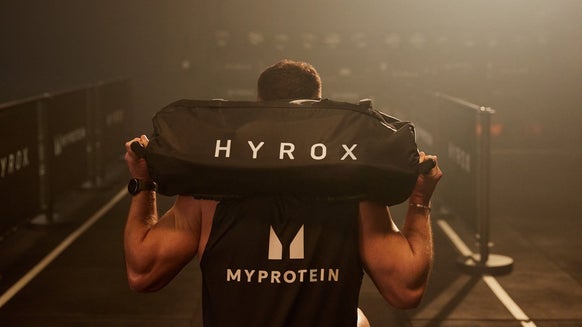
Every autumn, as the nights draw in, social media fills up with early-morning gym videos, meal prep and people announcing they've entered their "winter arc".
It's basically a head start on your New Year's resolutions, and you don't need to wait for 1st October to begin. Here's what the winter arc means, the rules people tend to follow, and a simple way to start yours... even if it's already December.
Jump to:
- What is the winter arc?
- What are the winter arc rules?
- How to start your winter arc
- Make December count with an advent calendar
- Frequently asked questions

What is the winter arc?
The winter arc is a self-improvement challenge where you use the last three months of the year to work on your goals, so you start January ahead instead of starting from scratch. It's usually counted as the 90 days from 1st October to the end of the year, a stretch one TikTok creator described as the time "where you can get ahead of the 'New Year, new me' crowd and hit your goals".1
The name borrows from storytelling, where a character's "arc" is the journey that changes them. The trend took off on TikTok in autumn 2024, with most videos focused on training, eating well, sleeping better and cutting out distractions.1
There's no official version, and that's part of the appeal. A winter arc can be as simple as training three times a week or as ambitious as a full reset of your routine.
What are the winter arc rules?
There are no official winter arc rules. Everyone sets their own, but the same few come up again and again:1
- A training target: for example, working out four times a week.
- A set bedtime: such as lights out by 10:30pm.
- Eating well: planning meals and hitting a protein target.
- Cutting distractions: less scrolling, gaming or late nights.
Some people go much further, with strict "contracts", cutting off friends or skipping every social event. You don't need any of that. The winter arc works best when it adds healthy habits to your life rather than taking the good things out of it.
Is it too late to start your winter arc?
No. There's nothing special about 1st October, and starting in November or December still gives you a head start on January.
It also helps to know that habits take time to form, and missing a day won't undo your progress. In a study of 96 volunteers who repeated a new eating, drinking or activity habit each day, the time it took to become automatic ranged from 18 to 254 days. Missing one opportunity to do the behaviour didn't materially affect how the habit formed.2 So aim for consistency, not perfection.

How to start your winter arc
Start small: two or three clear goals you can stick to are better than ten you'll drop by mid-December. If you need ideas, our list of healthy habits to make your life easier is a good place to begin, and habit stacking can help new habits stick by linking them to things you already do.
Set a training routine you can keep
Pick a schedule that fits your weeks, then protect it. As a starting point, the NHS recommends that adults do at least 150 minutes of moderate-intensity activity or 75 minutes of vigorous-intensity activity a week, plus strengthening activities that work all the major muscle groups on at least two days a week.3
If you want a structure to follow, a push, pull, legs split is a popular way to train three to six days a week.
Get your nutrition in place
Planning meals ahead makes it much easier to eat well when the evenings are dark and busy. Make sure every meal includes a good source of protein, which contributes to a growth in muscle mass.4
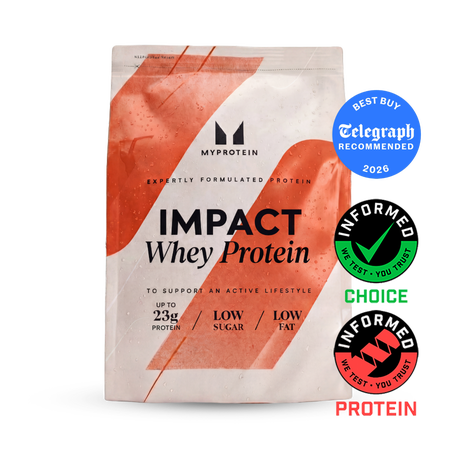
A shake is an easy way to top up. Impact Whey Protein Milkshake is the thickest shake in the Impact Whey range, with 20g of protein, under 112 calories and zero added sugar per serving.

Keep a regular sleep routine
The classic winter arc bedtime is there for a reason. The NHS says going to bed and getting up at similar times each day helps your body know when it's time to sleep, and suggests keeping your routine the same on days when you're not working too.5
Don't forget vitamin D
Shorter days mean less sunlight. The NHS advises that everyone should consider taking a daily supplement containing 10 micrograms of vitamin D during the autumn and winter.6
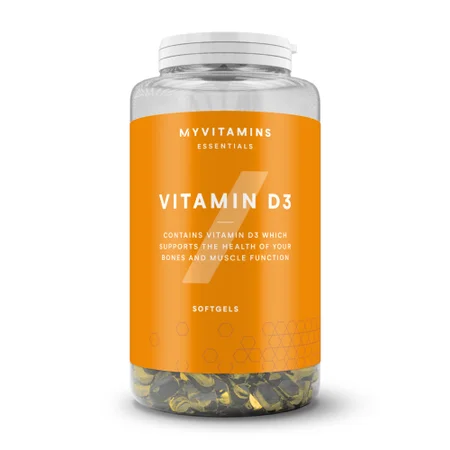
Our Vegan Vitamin D3 Softgels give you 25 micrograms of vitamin D3 in each softgel, and vitamin D contributes to the normal function of the immune system.4
Dress for dark, cold sessions
Early runs and evening walks are easier to keep up when you're warm. Layer up with a base layer, a mid layer and a jacket you can take off as you warm up. Our layering essentials have everything you need, and our outdoor training guide has more tips for training outside in winter.
Make December count with an advent calendar
If you're starting (or restarting) your winter arc in December, an advent calendar gives you something to look forward to every morning until Christmas Eve.
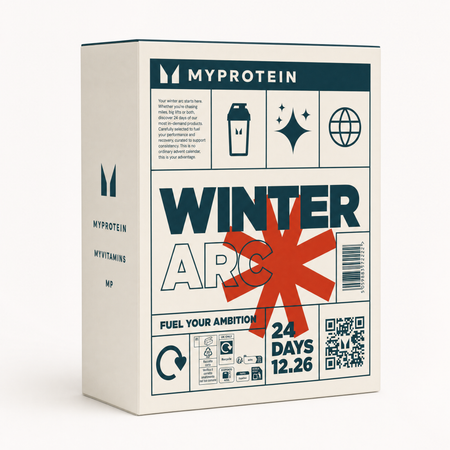
Myprotein Advent Calendar 2026
The Myprotein Advent Calendar 2026 has 24 doors, with a mix of Myprotein favourites and festive flavours behind them. There's everything from protein bars, cookies and shakes to creatine, hydration, supplements and training essentials, in a mix of samples and full-size products. Find out more in our guide to what's inside the Myprotein Advent Calendar.
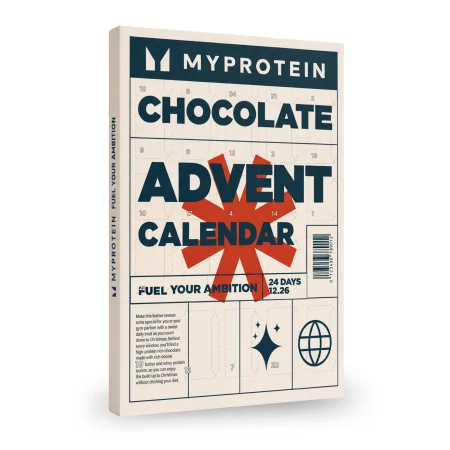
Chocolate Protein Advent Calendar
For something simpler, the Chocolate Protein Advent Calendar has a milk chocolate praline with a caramel and vanilla-flavoured filling behind each of its 24 doors. Each chocolate gives you 2.1g of protein, with no added sugar.
Sugar-Free Creatine Gummies: Watermelon Christmas Trees
Keep your creatine going through the festive season with these limited-edition Sugar-Free Creatine Gummies. Three red and green Christmas tree gummies give you 3g of creatine monohydrate, with zero sugar and no mixing. Creatine increases physical performance in successive bursts of short-term, high-intensity exercise, and the beneficial effect is obtained with a daily intake of 3g of creatine.4
Frequently asked questions
What does winter arc mean?
The winter arc means using the last three months of the year to work on your goals, such as training, eating well and sleeping better, so you start January ahead. "Arc" comes from storytelling, where a character's arc is the journey that changes them.
When does the winter arc start?
The winter arc traditionally starts on 1st October and runs to the end of the year, which is about 90 days. You can start whenever you're ready, though... November and December still give you a head start on January.
How long is the winter arc?
The winter arc usually lasts about 90 days, from 1st October to 31st December. If you start later, simply run it to the end of the year, or keep going into the new year.
What are the winter arc rules?
There are no official winter arc rules. Most people set their own, such as a training target, a set bedtime, planned meals and fewer distractions. Pick two or three you can stick to.
Can I start my winter arc in December?
Yes. There's nothing special about 1st October, and missing days doesn't stop a new habit from forming. Starting in December still means you go into January with a routine already in place.
Take home message
The winter arc is a simple idea: use the end of the year to build the habits you'd otherwise save for January. Set two or three realistic goals, train consistently, get your nutrition and sleep in place, and don't worry about missing the odd day. And if you're starting in December, the Myprotein Advent Calendar 2026 gives you something to open every morning along the way.

Founded in 2004, Myprotein has a long history of fuelling people’s fitness journeys. As the UK’s No. 1 Sports Nutrition Brand and Europe’s No. 1 Sports Nutrition Brand*, our mission is to provide you with reliable, evidence-based information, and our blog features articles from a trusted network of experts across fitness, nutrition and wellness. *Source Euromonitor International Limited; Consumer Health 2026 edition, retail value sales (RSP), all retail channels, 2025 data
References
- Glover A. The ‘Winter Arc’ Challenge Is All Over Social Media. But What Does It Mean? HuffPost UK, 2 October 2024. https://www.huffingtonpost.co.uk/entry/winter-arc-explained_uk_66fd3f8ae4b09a8f848733f7
- Lally P, van Jaarsveld CHM, Potts HWW, Wardle J (2010). How are habits formed: Modelling habit formation in the real world. European Journal of Social Psychology, 40(6), 998-1009. doi:10.1002/ejsp.674
- NHS. Physical activity guidelines for adults aged 19 to 64. https://www.nhs.uk/live-well/exercise/physical-activity-guidelines-for-adults-aged-19-to-64/
- Department of Health and Social Care. Great Britain nutrition and health claims (NHC) register. https://www.gov.uk/government/publications/great-britain-nutrition-and-health-claims-nhc-register
- NHS Every Mind Matters. How to fall asleep faster and sleep better. https://www.nhs.uk/every-mind-matters/mental-wellbeing-tips/how-to-fall-asleep-faster-and-sleep-better/
- NHS. Vitamin D. https://www.nhs.uk/conditions/vitamins-and-minerals/vitamin-d/