Whether you're trying to bulk up, lose weight, or just maintain muscle mass, getting your protein intake right is critical. How much is right for you will depend on a number of factors including your individual health and training goals. How much protein you need has been a topic of much discussion with issues often raised over the safety of high-protein diets. This article will look to clear things up where protein is concerned and outline how much you need to help you achieve your goals.
Jump to:
- What is protein?
- How much protein do you need each day?
- Protein for muscle and strength
- Protein for weight loss
- Do vegans need more protein?
- Do women need less protein than men?
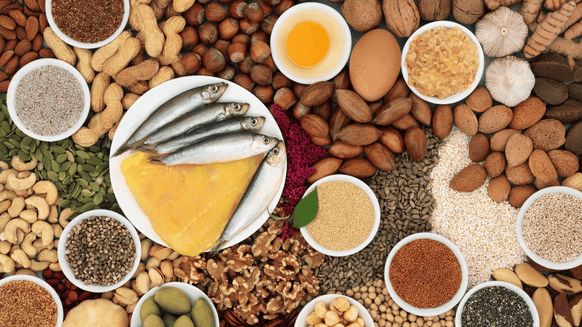
- What are some good sources of protein?
- Protein deficiency
- Side effects of too much protein
Protein is one of the most popular supplements, but what actually is it? Richie breaks it down here...
What is protein?
Protein is essentially a macronutrient made up of amino acids — specifically, 9 essential amino acids and 11 non-essential amino acids. Essential amino acids are the most important for their effect on your body's muscle protein synthesis, the process in which your body builds muscle, and you can only get essential amino acids through the diet as the body cannot produce them. Not all protein sources are the same, with some containing more essential amino acids than others.
Proteins are used all over the body and not just for muscle. Your body is made up of hundreds of different proteins and each one plays a key role in a number of cell functions. Regardless of your body composition or fitness goals, it's essential you consume enough protein for health reasons.
How much protein do you need each day?
Due to the wide range of actions that proteins are responsible for, the RDA for protein is 0.8g/kg/d, which is the minimum you should look to get in. The optimal intake depends on your body composition, training goals, and other calorie and macronutrient requirements. In athletic individuals training for a certain goal, optimal intakes can range from 1.2–2.5g/kg/d.1 For those dieting and aiming to lose weight, protein intakes may need to be on the upper end of that range as evidence shows keeping protein intake during an energy deficit will help preserve your lean muscle mass.2
Protein for muscle and strength
For building muscle, the optimal protein intake is 1.6g/kg/d.1 Building both muscle and strength is an energy-dependent process and you will require an appropriate number of calories from other macronutrients in order to hit your overall energy requirements. Whilst it may be possible to build muscle in an energy deficit, the textbook guidelines recommend an energy surplus of 250–450kcals to increase muscle mass.3
Due to protein's effect on satiety (feeling of fullness) after a meal, it may be difficult to hit high energy demands with protein intakes above 1.6g/kg/d. Additionally, for optimal recovery and performance, calories may be better spent on carbohydrates as full glycogen levels will help you perform at your best during high-intensity resistance training sessions.4
For strength and power athletes the recommended intake is 1.6–1.8g/kg.1 For those competing in weight-categorised strength sports (weightlifting and powerlifting, etc.), a slightly higher intake of 2g/kg/d may even suit you better, as a high protein intake will limit excess calories through its effect on satiety. 2g/kg/d may allow you to train and recover properly whilst simultaneously preventing unwanted weight gain due to any excess calories.
Protein for weight loss
In order to lose weight, you need to be in a calorie deficit. A substantial calorie deficit will increase the likelihood of losing muscle mass as well as fat mass.2 Muscle mass plays a critical role in keeping us healthy as it's important for strength, movement, injury prevention, and metabolic control.
Maintaining lean muscle mass will also help to prevent any weight regain after following a diet.
In a study comparing a protein intake of 2.4g/kg/d to 1.2g/kg/d whilst completing resistance exercise in a substantial energy deficit, those with an intake of 2.4g/kg/d preserved more muscle mass.2 Whilst you may not need to go as high as 2.4g/kg/d, in order to maintain muscle mass in an energy deficit, the recommended protein intake is between 1.4–2.4g/kg/d.1
Another key reason for getting your protein intake right during a weight loss plan is protein's effect on satiety.5 Protein will help keep you fuller for longer, which may mean you do not snack as often and take on more overall calories than you need.
Do vegans need more protein?
Animal protein sources have more essential amino acids than plant sources.6 Essential amino acids are the key element when assessing a protein source's ability to increase muscle protein synthesis rates. Specifically, there is a branched-chain amino acid called leucine which acts as a 'trigger' to increase muscle protein synthesis.7
In order to have the same impact on increasing muscle protein synthesis, vegans may need more of a protein source to get enough essential amino acids. However, there is evidence to show that supplementing leucine when consuming a vegan protein source with fewer essential amino acids will 'rescue' that protein source and allow it to have the same impact on increasing muscle protein synthesis.8
Do women need less protein than men?
Regardless of whether you are male or female, protein requirements are the same, as protein is utilised in the same way. However, using a g/kg measurement will mean you need less absolute protein on a daily basis — so females may not need to eat as much protein or fish to hit their protein requirements as males. An intake of 0.3g/kg per meal will be enough to maximise muscle protein synthesis for both males and females.1
What are good sources of protein?
Vegan sources
Per 100g:
- Source | Protein per 100g
- Pumpkin seeds | 30.2g
- Lentils | 24.6g
- Black beans | 21.6g
- Almonds (raw) | 21.2g
- Tempeh | 20.3g
- Tofu | 17.3g
- Oats (rolled) | 16.9g
- Quinoa (uncooked) | 14.1g
Meats
- Source | Protein per 100g
- Sirloin steak | 25g
- Ribeye steak | 25g
- Rump steak | 31g
- Pork chop | 32g
- Pork loin joint | 30g
Poultry
- Source | Protein per 100g
- Chicken breast | 32g
- Chicken thigh | 28g
- Turkey breast | 35g
- Duck breast | 25g
Fish
- Source | Protein per 100g
- Cod | 24g
- Haddock | 24g
- Salmon | 23g
- Sea bass | 24g
- Plaice | 21g
- Tuna (canned, drained) | 24g
- Prawns (king) | 18g
Dairy
- Source | Protein per 100g
- Whole milk | 3.3g
- Semi-skimmed milk | 3.4g
- Skimmed milk | 3.4g
- Greek yoghurt (whole) | 9.8g
- Greek yoghurt (0% fat) | 11g
- Cheddar cheese | 25g
- Feta cheese | 15g
Protein supplements
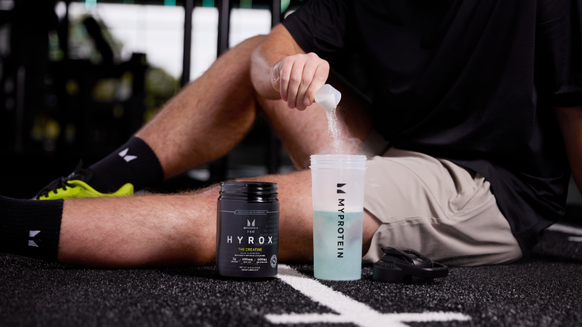
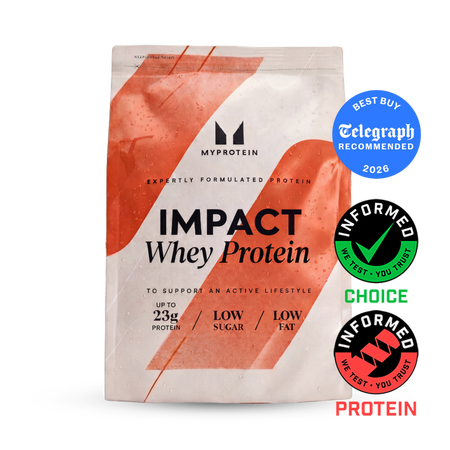
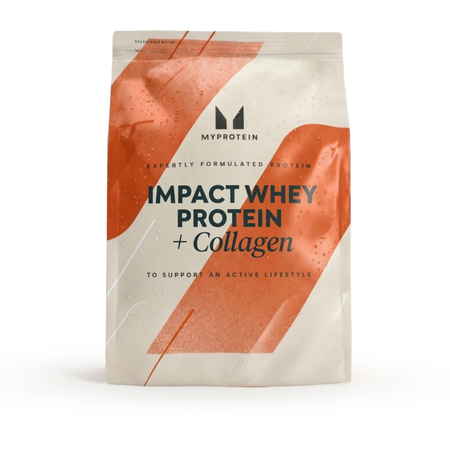
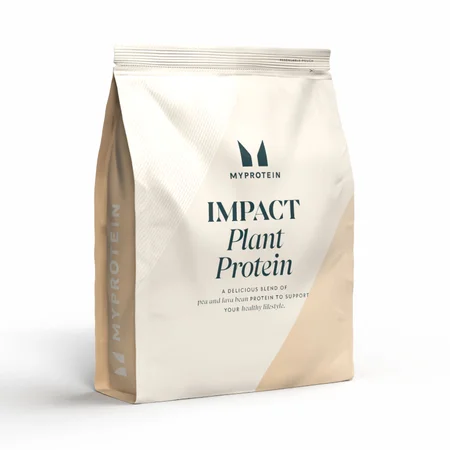
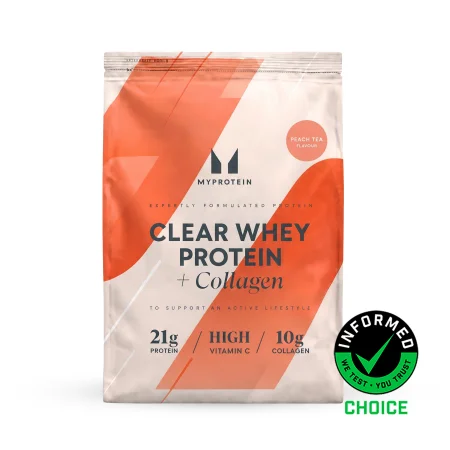
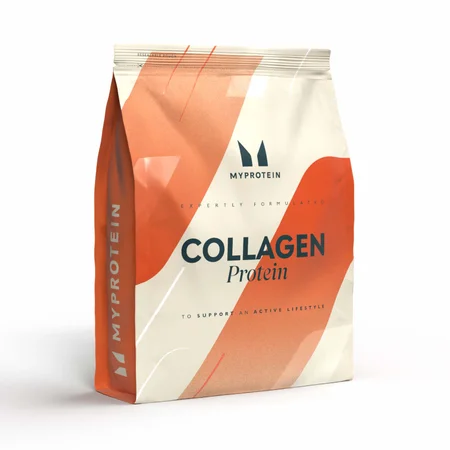
For many people, hitting a daily protein target of 1.6g/kg/d or above through food alone is challenging — particularly around training or on busy days. Protein powders are a practical way to bridge the gap. The most common options are whey protein (available as concentrate, isolate, or hydrolysate), casein, plant-based proteins such as pea and soy, and whey and collagen blends. Whey and casein are the most well-evidenced for muscle protein synthesis; plant-based options suit those on vegan or dairy-free diets; and whey and collagen blends are worth considering for those who also want to support joints and connective tissue, as collagen forms the building blocks of tendons, ligaments, and cartilage alongside its role in overall protein intake.
Protein deficiency
A lack of protein in your diet will lead to a range of health concerns. These can include skin lesions, thin brittle hair, and hormone imbalances. On a long-term basis, low protein intake may lead to a condition known as sarcopenia.9 This is the loss of muscle mass during the ageing process. A lack of muscle mass in an older person can be quite debilitating as it can prevent day-to-day activity that can be taken for granted at a younger age.
For healthy individuals, if you are eating a well-balanced diet, it is unlikely you will fall below the RDA of 0.8g/kg.
Side effects of too much protein
Over the years, the safety of high-protein intakes has been heavily discussed. Whilst a lot of negative reports of high protein intakes have been proven to be unfounded in healthy individuals,1 those with existing health conditions (especially kidney problems) should exercise caution and discuss with a doctor or a registered dietitian before starting a high-protein diet.
For healthy individuals there is evidence that long-term intakes as high as 3.4g/kg/d have no detrimental health impacts.10 However, taking your protein intake so high that it prevents you from getting enough other macronutrients within your calorie allowance may cause problems. For example, if you are consuming so much protein that you do not have enough calories left for an appropriate amount of carbohydrates, side effects may include constipation, dehydration, and bad breath.
Eating a balanced diet with a protein intake optimal for your health and fitness goals (1.2–2.5g/kg/d) will help to reduce side effects and prevent health concerns.
Take home message
Protein is essential for health, with optimal intakes dependent on your goals. The RDA for protein is 0.8g/kg/d. For active individuals this will need to be higher. Those looking to build muscle should aim for 1.6g/kg/d, and for maintaining muscle mass whilst dieting a higher intake between 1.4–2.4g/kg/d may be required.
Enjoyed this expert article?
READ THESE NEXT:

A certified sports nutritionist, Liam has a Bachelor of Science in Sport and Exercise Science, an ISSN Diploma in Applied Sport and Exercise Nutrition, and is registered with the British Dietetics Association's Sport and Exercise Nutrition. He is also an experienced personal trainer, providing practical, evidence-based nutrition and exercise advice to help clients achieve their fitness goals. In his free time, he enjoys powerlifting, hill walking, playing football, and expanding his recipe repertoire.
- Jäger, R., Kerksick, C.M., Campbell, B.I. et al. International Society of Sports Nutrition Position Stand: protein and exercise. J Int Soc Sports Nutr 14, 20 (2017). https://doi.org/10.1186/s12970-017-0177-8
- Thomas M Longland, Sara Y Oikawa, Cameron J Mitchell, Michaela C Devries, Stuart M Phillips, Higher compared with lower dietary protein during an energy deficit combined with intense exercise promotes greater lean mass gain and fat mass loss: a randomized trial, The American Journal of Clinical Nutrition, Volume 103, Issue 3, March 2016, Pages 738–746
- Slater GJ, Dieter BP, Marsh DJ, Helms ER, Shaw G, Iraki J. Is an Energy Surplus Required to Maximize Skeletal Muscle Hypertrophy Associated With Resistance Training. Front Nutr. 2019 Aug 20;6:131. doi: 10.3389/fnut.2019.00131. PMID: 31482093; PMCID: PMC6710320
- Burke LM, Hawley JA, Wong SH, Jeukendrup AE. Carbohydrates for training and competition. J Sports Sci. 2011;29 Suppl 1:S17-27. doi: 10.1080/02640414.2011.585473
- Douglas Paddon-Jones, Eric Westman, Richard D Mattes, Robert R Wolfe, Arne Astrup, Margriet Westerterp-Plantenga, Protein, weight management, and satiety, The American Journal of Clinical Nutrition, Volume 87, Issue 5, May 2008
- Gorissen SHM, Witard OC. Characterising the muscle anabolic potential of dairy, meat and plant-based protein sources in older adults. Proc Nutr Soc. 2018 Feb;77(1):20-31. doi: 10.1017/S002966511700194X
- Breen L, Churchward-Venne TA. Leucine: a nutrient ‘trigger’ for muscle anabolism, but what more?. J Physiol. 2012;590(9):2065-2066. doi:10.1113/jphysiol.2012.230631
- Churchward-Venne TA1, Breen L, Di Donato DM, Hector AJ, Mitchell CJ, Moore DR, Stellingwerff T, Phillips SM. (2013) Leucine supplementation of a low-protein mixed macronutrient beverage enhances myofibrillar protein synthesis in young men: a double blind, randomized trial. Am J Clin Nutr. 2014 99(2):276-86
- Paddon-Jones, Douglas, and Blake B Rasmussen. “Dietary protein recommendations and the prevention of sarcopenia.” Current opinion in clinical nutrition and metabolic care vol. 12,1 (2009): 86-90. doi:10.1097/MCO.0b013e32831cef8b
- Antonio J, Ellerbroek A, Silver T, Orris S, Scheiner M, Gonzalez A, et al. A high protein diet (3.4 g/kg/d) combined with a heavy resistance training program improves body composition in healthy trained men and women–a follow-up investigation. J Int Soc Sports Nutr. 2015;12:39.