With a distinctive white colour and jelly-like texture, tremella mushrooms — commonly known as the "snow mushroom" or "beauty mushroom" — are a fascinating edible fungus with a long history of use across Asia.
According to Chinese folklore, Yang Guifei, one of the Four Beauties of ancient China, regularly consumed soups made from this gelatinous mushroom and bathed in water infused with them to help maintain her youthful complexion.
But beyond the legends, what does modern science say? As interest in functional mushrooms continues to grow, researchers are increasingly exploring what these mushrooms actually contain — and whether the health claims stand up to scrutiny.
What are tremella mushrooms?
For centuries, tremella mushrooms, known scientifically as Tremella fuciformis, have been consumed as food and used in traditional medicine, and their remarkable ability to retain water is thought to be behind many of their well-known hydrating properties.1,2
The edible, jelly-like fruiting body of the tremella fungus, they grow on dead branches in tropical regions around the world,3 and their delicate texture and mild flavour make them a popular ingredient in soups, desserts and teas.
But they are more than just a culinary ingredient. Tremella mushrooms are rich in active compounds and have long been used in herbal medicine.4,5 If you have come across other functional mushrooms, you may already know that different varieties tend to be associated with different benefits — lion's mane for cognitive support, for example, and cordyceps with energy. Tremella has traditionally stood out for its hydrating properties and links to healthy ageing.6,7
The compounds most associated with these effects are called polysaccharides — a type of complex carbohydrate found in the mushroom. These are thought to support skin hydration, the immune system, and protection against cell damage.1,5
Tremella mushroom benefits
The way these polysaccharides are structured appears to influence how well they work, which means the quality of any tremella product matters. For example, the size of the molecules can affect how well they are absorbed, and the more water-attracting groups they contain, the better they are at holding moisture.8
It is also worth knowing that while the research into tremella is promising, most studies so far have been carried out in the lab or in animals rather than in humans. This means we cannot yet draw firm conclusions about all of the benefits, though the human evidence is beginning to grow.
Skin health & hydration
This is probably what tremella mushrooms are best known for, and the science gives some reason for the hype. The polysaccharides in tremella contain water-attracting molecules that help draw in and hold onto moisture — which is why they are increasingly used as an ingredient in skincare products.8
Research suggests they may help relieve dry skin, support the skin's natural barrier, and maintain overall skin health.8 Animal studies have also found that tremella polysaccharides may offer some protection against UV damage, with treated mice showing higher levels of skin moisture and collagen after sun exposure compared to those that did not receive the treatment.8
Antioxidant properties
Tremella mushrooms also contain natural antioxidants, which are compounds that help protect your body from something called oxidative stress.8 In simple terms, oxidative stress happens when harmful molecules — known as free radicals — build up in the body. Over time, this can contribute to ageing and increase the risk of certain chronic diseases.
Lab studies suggest that compounds in tremella, including its polysaccharides, may help neutralise these free radicals and protect cells from damage.6,9,8 While this research is still at an early stage, it points to an interesting area of potential benefit.
Immune system support
There is also growing interest in tremella's potential to support the immune system. Studies suggest that its polysaccharides may help activate key immune cells — including T-cells, B-cells and macrophages — which play an important role in fighting infections and keeping the immune system balanced.8
Animal studies have also found that tremella polysaccharides may help reduce inflammation and support gut health. In mice with gut inflammation, they appeared to encourage the growth of beneficial gut bacteria and help restore a healthier balance in the gut, both of which are linked to better immune function.5
Cognitive health
Emerging research suggests tremella polysaccharides may also have a protective effect on the brain, including encouraging the growth of neurons.8 Animal studies have shown improvements in memory and learning, and one lab-based study suggested these compounds could be worth exploring in the context of neurodegenerative disease, though this research was conducted in test tubes rather than in people.10
Encouragingly, one randomised controlled trial — the gold standard of clinical research — found that tremella fuciformis supplementation was associated with improvements in cognition in people experiencing early memory concerns, providing some early human evidence and highlighting the need for larger trials to confirm these findings.11
Tremella vs hyaluronic acid
If you are interested in skin hydration, you have probably heard of hyaluronic acid — a naturally occurring substance in the body that helps keep skin plump and joints lubricated.12 Tremella polysaccharides work in a similar way, attracting and retaining water, but they come from a fungal source rather than an animal one, making them a promising vegan-friendly alternative.8,3
What's more, lab research suggests they could be more cost-effective too. One review found that skincare products containing 0.05% tremella polysaccharides may outperform those with 0.02% hyaluronic acid on moisture retention — at around 14% of the cost.8 On top of hydration, tremella also brings potential antioxidant and immune-supporting properties to the table, which hyaluronic acid does not.8
Side effects and safety
Tremella mushrooms are generally considered safe when consumed as food or used in supplements and skincare products. That said, if you are pregnant, breastfeeding, or taking medication, it is always worth checking with your doctor before adding any new supplement to your routine. If you are thinking about trying them fresh, avoid foraging for them yourself — there are poisonous lookalikes that are easy to confuse with the real thing.
How to use tremella mushrooms
Traditionally, tremella mushrooms are soaked in water and added to soups, teas, or desserts. Today, you can find them in a variety of forms — dried whole mushrooms, capsules, and powders that can be stirred into smoothies, teas, or soups.8 If you are new to functional mushrooms, a powder, capsule or gummy is often the easiest way to start.
Tremella mushroom gummies
For a particularly convenient option, mushroom gummies are a form worth considering. Unlike powders or capsules, gummies are easy to take on the go with zero prep.
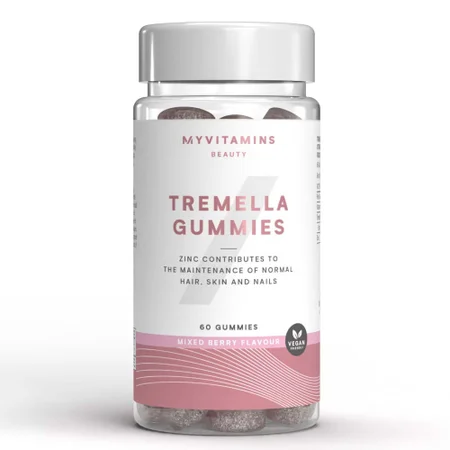
Tremella Hair, Skin & Nails Gummies deliver 20mg of highly concentrated tremella polysaccharide powder (a 200:1 extract equivalent to 4,000mg of whole tremella mushroom per serving) alongside vitamin C, which contributes to normal collagen formation for the normal function of skin, and zinc, which contributes to the maintenance of normal hair, skin, and nails. They are also vegan-friendly, making them a straightforward addition to an existing beauty or wellness routine.
FAQs
What are tremella mushrooms?
Tremella mushrooms (Tremella fuciformis) are an edible, jelly-like fungus that grows on dead branches in tropical regions. Also known as the snow mushroom or beauty mushroom, they have been used in Asian cooking and traditional medicine for centuries, and are valued for their hydrating properties and associations with healthy ageing.
What are the benefits of tremella mushrooms?
Research suggests tremella mushrooms may offer several potential health benefits, largely driven by their polysaccharides. These include supporting skin hydration, providing antioxidant protection against cell damage, supporting immune function, and possibly protecting brain health. Most evidence comes from lab and animal studies, though early human research is beginning to emerge.
Are tremella mushrooms good for skin?
Tremella mushrooms are increasingly used in skincare for their ability to attract and retain moisture. Their polysaccharides contain water-loving molecules that may help relieve dry skin, support the skin's natural barrier, and maintain overall skin health. Animal studies also suggest they may offer some protection against UV damage, though human studies in this area are still limited.
How do tremella mushrooms compare to hyaluronic acid?
Both tremella polysaccharides and hyaluronic acid work by attracting and holding water. The key differences are that tremella comes from a fungal source, making it suitable for vegans, and lab research suggests it may be more cost-effective. Tremella also has potential antioxidant and immune-supporting properties that hyaluronic acid does not.
What are tremella mushroom polysaccharides?
Polysaccharides are a type of complex carbohydrate found naturally in tremella mushrooms. They are the key active compounds thought to be responsible for most of tremella's potential health benefits, including its ability to retain moisture, its antioxidant properties, and its possible effects on immune function and brain health.
Can tremella mushrooms help with brain health?
Early research is promising but still limited. Lab and animal studies suggest that tremella polysaccharides may help protect brain cells, encourage neuron growth, and support memory and learning. One small randomised controlled trial also found improvements in cognition in people experiencing early memory concerns. Larger human trials are needed before any firm conclusions can be drawn.
Are tremella mushrooms safe?
Tremella mushrooms are generally considered safe when eaten as food or used in supplements and skincare products. If you are pregnant, breastfeeding, or taking medication, speak to your doctor before taking any tremella supplement.
How do you take tremella mushrooms?
Tremella mushrooms can be enjoyed in several ways. Traditionally, they are soaked and added to soups, teas or desserts. They are also widely available as powders, capsules, dried whole mushrooms, and increasingly as mushroom gummies — a convenient format that is easy to take on the go and pairs well with other skin-supporting nutrients. For anyone new to functional mushrooms, a gummy or capsule supplement is usually the most straightforward way to start.
Take home message
Tremella fuciformis is a mushroom with a long history of use and a growing body of modern research to back up some of its traditional claims. The evidence suggests its polysaccharides may support skin hydration, offer antioxidant protection, and help the immune system — with some early human research also pointing to potential benefits for brain health. That said, most of the evidence is still pre-clinical, and larger human trials are needed before firm conclusions can be drawn. Watch this space.
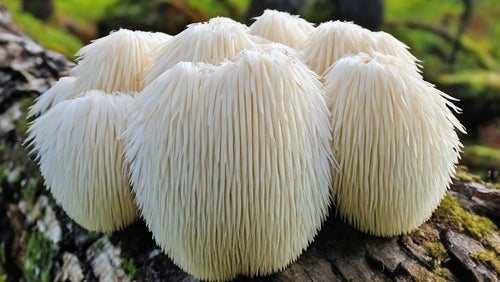
What Is Lion’s Mane? Health Benefits, Uses & Best Supplements
Mushrooms can do what?...
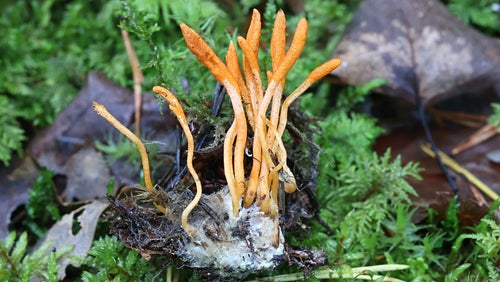
What are Cordyceps Mushrooms? 5 Science-Backed Benefits
& why you should consider supplementing with this fungus....
Reishi Mushroom Benefits: The "Mushroom of Immortality" Explained
A natural way to boost your immune system....

- Moon, G., Rustamov, N., Park, J., Park, H., Park, K., Choi, E. H., & Roh, Y.-S. (2025). Anti-stress effects of Tremella fuciformis Berk. enzymatic extracts: A preclinical study. Nutrients, 17(5), 914. https://doi.org/10.3390/nu17050914
- Zhang, L., Chen, J., Xu, F., Han, R., & Quan, M. (2022). Effect of Tremella fuciformis and different hydrocolloids on the quality characteristics of wheat noodles. Foods, 11(17), 2617. https://doi.org/10.3390/foods11172617
- Wu, Y., Wei, Z., Zhang, F., Linhardt, R. J., Sun, P., & Zhang, A. (2019). Structure, bioactivities and applications of the polysaccharides from Tremella fuciformis mushroom: A review. International Journal of Biological Macromolecules, 121, 1005–1010. https://doi.org/10.1016/j.ijbiomac.2018.10.117
- Mineroff, J., & Jagdeo, J. (2023). The potential cutaneous benefits of Tremella fuciformis. Archives of Dermatological Research. https://doi.org/10.1007/s00403-023-02550-4
- Xu, Y., Xie, L., Zhang, Z., Zhang, W., Tang, J., He, X., Zhou, J., & Peng, W. (2021). Tremella fuciformis polysaccharides inhibited colonic inflammation in dextran sulfate sodium-treated mice via Foxp3+ T cells, gut microbiota, and bacterial metabolites. Frontiers in Immunology, 12. https://doi.org/10.3389/fimmu.2021.648162
- Li, H., Lee, H.-S., Kim, S.-H., Moon, B., & Lee, C. (2014). Antioxidant and anti-inflammatory activities of methanol extracts of Tremella fuciformis and its major phenolic acids. Journal of Food Science, 79(4), C460–C468. https://doi.org/10.1111/1750-3841.12393
- Galla, R., Mulè, S., Ferrari, S., Parini, F., Givonetti, A., Cavaletto, M., Miletto, I., Paul, G., Giovenzana, G. B., Marchese, L., Molinari, C., & Uberti, F. (2025). Non-animal hyaluronic acid from Tremella fuciformis: A new source with a structure and chemical profile comparable to hyaluronic acid. Foods, 14(8), 1362. https://doi.org/10.3390/foods14081362
- Ma, X., Yang, M., He, Y., Zhai, C., & Li, C. (2021). A review on the production, structure, bioactivities and applications of Tremella polysaccharides. International Journal of Immunopathology and Pharmacology, 35, Article 205873842110005. https://doi.org/10.1177/20587384211000541
- Shen, T., Duan, C., Chen, B., Li, M., Ruan, Y., Xu, D., Shi, D., Yu, D., Li, J., & Wang, C. (2017). Tremella fuciformis polysaccharide suppresses hydrogen peroxide-triggered injury of human skin fibroblasts via upregulation of SIRT1. Molecular Medicine Reports, 16(2), 1340–1346. https://doi.org/10.3892/mmr.2017.6754
- Park, K. J., Lee, S.-Y., Kim, H.-S., Yamazaki, M., Chiba, K., & Ha, H.-C. (2007). The neuroprotective and neurotrophic effects of Tremella fuciformis in PC12h cells. Mycobiology, 35(1), 11–15. https://doi.org/10.4489/MYCO.2007.35.1.011
- Ban, S., Lee, S. L., Jeong, H. S., Lim, S. M., Park, S., Hong, Y. S., & Kim, J. E. (2018). Efficacy and safety of Tremella fuciformis in individuals with subjective cognitive impairment: A randomized controlled trial. Journal of Medicinal Food, 21(4), 400–407. https://doi.org/10.1089/jmf.2017.4063
- Fallacara, A., Baldini, E., Manfredini, S., & Vertuani, S. (2018). Hyaluronic acid in the third millennium. Polymers, 10(7), 701. https://doi.org/10.3390/polym10070701